Having spent a great part of my Christian life in Fundamentalist and Evangelical circles I am very aware of the importance that is placed upon evangelism. (And believe me I know the distinctions and distinctives inside and out, both the good and the bad. I will write about just that sometime, but not now.) It does not take a Greek scholar (I am no scholar but I did have four years of the language) to see that “evangelism” and “evangelical” come from the same root word. That Greek word is euangelion. The word actually means “gospel” or “good news.” So in essence, being an evangelical or practicing evangelism has a lot to do with sharing the gospel of Jesus. This is probably best described in 1 Corinthians 15:1- 8 and other places in the New Testament.
In some folks mind, it appears that all that matters is the person’s soul. The material body is nothing more than an abode for a person’s immaterial soul. If that is the case, w hat happens to the body does not matter. Do we think Jesus just fed the hungry so he could feed the soul? Do we really think he did not care that they were indeed hungry? Did he heal the body of the sick just so he could heal their soul? Do we really think he did not care that they were sick? Of course he cared. When you see it that black and white the answer is clear. Jesus cared for the whole person. He was concerned with the poor and the oppressed and not simply because they had an eternal soul. He was concerned with their entire being, with their whole humanity.
The other week I received an email from a friend of mine in Ohio who shared a true experience that caricatures this in the extreme. The woman who wrote this is a Christian and is sympathetic with their belief in Jesus. But . . . well the point becomes clear easily enough.
I was walking Otto in the p ark behind our house and a younger couple approached me. She was wearing a long skirt, had long hair - looked like she came from one of the holiness churches. She was carrying an enormous Bible. He came toward me with a tract saying he wanted to give me some information. I told him I wasn't interested and he kept coming toward me talking. Fortunately Otto kicked into attack dog mode and started snarling and growling and they left me alone. I can't imagine that this approach really works. It's a Friday night at the park, you have two ball games going on, a birthday party in the picnic pavilion by the pool, and an assortment of people walking dogs and biking. The last thing anyone wants is to be accosted by people bearing tracts. David and Claire had two guys come up to them in the park so obviously some church is doing a push in the park tonight. Later they'll probably all get together to talk about how persecuted they are and how no one is interested in Christ and we're all going to hell. With no clue that their approach is a huge turnoff. Cornering a woman walking alone in an area near the woods is never a smart idea no matter what you're trying to give out. When I left they were chasing down an old lady walking up the hill.
When you read that, what comes to mind? My feelings are all over the place in that one. Not only have I had the similar experience, I had it from both sides! I have been both the recipient and the person doing the “evangelizing” in this manner. There may have been a time when this sort of cold evangelism worked well, but those days are rapidly becoming a thing of the past . . . if they are not already.
I fully believe if we are to be missional, we should share our belief in Jesus. We should share our faith journey clearly when the opportunity presents itself. If Jesus is the hope of the world, and I believe he is, we should be sharing his message with others. But that is not all that I believe. I also believe we should care for people in the here and now in addition to caring for them in the ever after. Call it holistic. Call it total person ministry. Call it whatever you wish. I call it Biblical.
If we are to be missional in a suburban setting we have to evaluate how we minister to the whole person and not just seek another “notch” in our gun. This will mean ministering in our suburbs, but it is going to mean venturing out of our suburbs at some point too.
This blog has had a bit of a ramble to it, and that is okay. It is my blog. But, I fear that some reading it may feel that I make light of the fact that Jesus died so we could be with Him in eternity. I do not make light of that fact. I am betting my eternity on it. I just do not want us to get so bogged down on eternity that we miss today.
Thursday, August 25, 2005
Missional in the Suburbs: Part 9 – Sharing Our Faith
Tuesday, August 23, 2005
Missional in the Suburbs: Part 8 – Missional and Steroids
 I am back from vacation and trying to get re-engaged fully in what is taking place. Unfortunately with all that is going on presently with our worshipping community I never fully unplugged. Even though there was no Internet access, I had numerous phone calls last week addressing issues. So once again, I confess my sin and promise to “work on” learning how to better unplug. (That even sounds funny doesn’t it?) It is a lifelong process for me.
This past weekend in worship we were looking at the 9th in a series of messages from the book of Deuteronomy. This choice of studies was very intentional. You see, Fountain Park, as a new church, is very transitional. We are moving from a temporary location to a more semi-permanent one in this next phase in the life of our church. (Read about buildings in Part 5 of this series.) The comparisons to the nation of Israel in Deuteronomy are not difficult to make. Where the nation of Israel had lived their entire existence up to the context of the book of Deuteronomy as nomads or slaves, we have had a similar feel of being nomadic. Likewise, where the Israelites were moving into a new land we are moving. (Seeing how the people drifted from God often after arriving, I have to pray we do not follow suit on that!)
By now you are probably wondering what the heck is up with the title of this blog. Okay, here goes. Last week I was at a denominational meeting where I was giving an update on our ministry. In my explanation of what it means to be missional I, off the cuff, made a couple of statements and comparisons that rang true to me as I stated them. I repeated them this past Sunday in our worship gathering.
For many years we in the organized church have heard discussions on what was deemed “Lifestyle Evangelism.” (I have a book on my shelf by that exact title.) In the 1980’s the Christian Businessmen’s Committee did an excellent video series displaying that very theme in human characters. The basic premise of Lifestyle would be what is deemed “bloom where God has planted you.” As you live your life at work, at play, at home, etc., you should seek to be the presence of God in those locations as you seek opportunities to share your faith with others and hopefully see them come into a relationship with Jesus.
Some reading discussions on being missional could easily confuse it as just a repackaging of Lifestyle. While there is something to those comments in that it is about your everyday life, the comparisons fall short. I expressed in both the denominational meeting and the worship gathering that being missional is really lifestyle evangelism on steroids. Where lifestyle evangelism is about blooming where you are planted, being missional is seeking to have God plant you. Often that is somewhere else other than where you would normally go. It is about intentionally being involved in the community for the express purpose of being salt and light. Being missional is about getting into the lives of others where they live them not simply where you live your life.
If there is one word that would seem to make the shift seem clear for me, it would be the word “intentionality.” Being missional is being intentional about finding places to plant yourself and being Jesus for the folks you meet while there. It is taking everything up a notch.
As Fountain Park is moving worship locations, we are getting some input from those on the outside asking about the new place, how we feel about it, what is the excitement level, etc. You know . . . the usual. As I was writing some quotes for a local community magazine, I penned these words.
“This new facility is not our ‘church.’ To us, the church is the people who choose to make Fountain Park their worshipping community. We view this move as simply Phase IV in the life of the people who are Fountain Park Church.”
“The vision of Fountain Park Church is to be a missional community that would give more back to our community than we receive from it.”
“One of our goals would be to alter how folks view the church.”
I want us as a worshipping community to be intentional about how we express our faith, and where we live it. By that I am talking about finding new places to live out our faith that may or may not be where we would naturally find ourselves.
I want us to have lifestyle evangelism . . . but on steroids!
Sunday, August 14, 2005
Vacation
I am heading out on vacation. Courtesy of some wonderful folks in my church, we will be staying at a small lake in Eastern Ohio. In addition to some reading, riding and resting, I intend to do some writing (sorry even a Southerner could not spell it with an "r"!) Since there will be minimal Internet access at best, I intend to come back with the Missional series complete and a few others started. Catch you on the flip side!
Friday, August 12, 2005
Missional in the Suburbs - Part 7: People and Life Situations - Con’t.
 The past week has been pretty busy for me. I last wrote about performing my youngest daughter’s wedding. This Wednesday, my oldest daughter gave birth to our first granddaughter. Her name is Téah Jane Creasy. She is a tiny thing. She weighed in at 5 lbs. 12 ozs. and only 17" long. But is she ever beautiful!
So as I think about life situations . . . as you can see, I am living them in spades!! These are good situations for me, but I am reminded that it presents an opportunity for me to be missional when others around me experience the same!
Welcome Téah! I cannot wait to get a photo of me with all three children!!! I now need to update my profile!
Monday, August 08, 2005
Missional in the Suburbs: Part 6 - People and Life Situations
 If you do much reading on missional church issues you have no doubt noticed, as I have mentioned here previously, that it usually seems to be spoken of in an urban setting. I am not railing against that, the urban area was overlooked for far too long in church planting. It just seems unfortunate to me, that now that urban ministry is getting its well deserved and much needed attention, most missional discussions end there. I guess I am a bit saddened that it has caused some folks to forget that missional also extends to the suburbs. In this series of blogs, I have attempted to talk about this oversight while at the same time talk about ways we can be missional in the suburbs.
I have been absent here for about a week. With our church’s new worship location in full scale preparation for our September move things have been a bit hectic. Another event that has taken a significant amount of time in our family this past week was the wedding of my youngest daughter – that is her in the photo. Weddings are always traumatic for fathers of the bride. This one was no exception. But it does lead into what I think is one missional opportunity in the suburban church.
My daughter’s wedding was outside at a local park and a relatively simple affair. I use the term relatively because we have all seen those weddings that take days to pull off and life savings to fund. But in reality a wedding is an event, and an important event. By the time September has ended I will have performed / participated in seven weddings in eight weeks. In each case, this was a major life event for the folks involved. It was a gathering time, a family time, and a community time.
There are two primary discussions put forth in the missional discussion as it relates to urban ministry. The first discussion is the idea of being in the third place with folks (work and home being the first and second) to model Christlikeness. The third place is their spot to relax or unwind, or play. The third place is where they go because they want to. The concept that urban areas are where there are large concentrations of people who need Jesus in their lives is the second discussion. My question aloud today is “do not these same two ideas hold true in the suburbs?”
Are there not people, thousands of people, in these areas? There are 50,000 in close proximity to our worship location. Look around where you are; we in Pittsburgh are not alone in this. This is more normal than not. If people matter to Christ, and they do, then people in the suburbs matter as well. And if we reach these folks with the gospel of Christ and change their lives what impact does it have? Let’s face it, many of these people are, or will one day become the leaders in business and society. What impact can we have if those folks enter their influential roles with a Christlike perspective on life?
Finding a “third place” in the suburbs can be a bit harder. That location may mean the sports fields for their children or the local coffee shop as I previously discussed. But could it not also be important family events – like a wedding. Is it not missional to be with folks in the important issues that arise in their lives? As I have done wedding after wedding I have been keenly aware that this is an opportunity I cannot pass up to allow folks to see something in me. Standing around with a guy at a wedding reception with a beverage in my hand talking about life issues, sports, or work is a great opportunity to be missional.
Here is another example. Two weeks ago I performed an outdoor wedding. The temperature was extremely hot and the wedding was in full sunshine. As the photographer took photograph after photograph after photograph I began to notice that folks were getting very hot. I transformed myself into a water boy and began carrying bottles of ice cold water to the family members and friends waiting to be in photos. I wanted them to see someone who would serve them with no expectation of return. I saw it as a missional opportunity.
Do you live in the suburbs? Are their events on the horizon that fit this type of opportunity? Do not dread them. These are opportunities to be with people in a missional way. If we are called to be missional (and we are) and we live in the suburbs, why not seek ways to be Jesus to the people you interact with in the situations of life?
Wednesday, July 27, 2005
Missional in the Suburbs – Part 5: The Emerging Church
I just finished viewing the two part PBS special on the Emerging Church. They are viewable here and here. I felt that both accounts were credible. It did not appear to be a hatchet job on either side. However they made it abundantly clear that there are differences in the two viewpoints.
One of the most striking things about the Emerging Church movement is that it is so diverse and so varied that it is difficult to pin down. What do they believe? The answer is “yes,” it would appear. Before going any further, let me say right up front that in many respects my church falls under the emerging  church banner – whatever that banner is. We do not advertise ourselves by that moniker, nor do we resist it when brought up in regard to us. I have attended some of the Emergent national gatherings, read their materials, and ascribe to a great deal of what they believe Jesus says the church should be about. I visit the web sites often for a kick in the seat of my pants on justice issues or social concerns that many Evangelicals simply overlook. I love the experiential aspect of worship Emerging Churches espouse that probably has seeds in the “Bapticostal” church of my youth.
In many cases I fit better in the Emerging Church mold than I do in the mold of my own denomination, where I have heard my beliefs (especially eschatological beliefs) and my very personhood and character publicly ridiculed. I have not yet heard anyone at an Emerging Church gathering ridicule anyone’s beliefs or character. Now some of the critics will say that this is because the Emerging Church does not believe in Absolute Truth, so there is no right to ridicule. Although there may be some in this broad umbrella that believe that, none in my circle fit that caricature. And that is what I think it is in many cases. If we can say that someone does not believe in Absolute Truth, we have labeled them and they are outside and “not us.” My friends who hold some of the Emerging Church beliefs all believe in Absolute Truth and are probably in the Evangelical Camp for most theological discussions. (I say most because a broad sweeping discussion like this is not easily generalized.)
I resonate with the Emerging Church for a reason that may surprise you. I am by all accounts what the media would call an Evangelical Christian. In my past I was a fundamentalist – a very rigid fundamentalist, well to the right of Jesus, Paul and Peter. As I have matured in my faith, I am 51 years old now; I have fewer answers and more questions. Yet I am more assured about the basic tenants of Christianity than ever before. One of the drawing cards for my acceptance of the Emerging Church is that I find it to be less condemning. I get very weary of having my “card punched” at the latest Evangelical gathering to be sure I am on the right side of whatever their latest issue is.
[Side Bar: I wonder if the early Reformation was not caricatured in much the same way as the Emerging Church leaders are today? Hm-m-m-m.]
However, here is a primary reason I am drawn to a lot of the Emerging Church discussion: I see them as being more missional than where I usually tread. Their compassion and care for the oppressed, their desire to be the church wherever they find themselves resonates with me and my Evangelical heritage. As much as a disjointed movement can appear anything, the Emerging Church really does seek to be the church in whatever venue it finds itself. This does not mean it is without those who are along for an experiential ride. Everything Christian will have "riders" who do not get the true purpose, but are in it for themselves. However, more so than most Christian groups I have been a part of, the Emerging Church does seek to keep the missional element at the forefront and remind adherents of that purpose.
One person who is being lifted up as a speaker for this colletion of churches is Brian McClaren. Please do not quote me as saying I believe everything Brian McClaren teaches. I do not. I don’t believe everything anyone teaches today, me included! I like a lot of what Brian does, but I think he simply raises some issues filling his role as a prophet to call folks to question the status quo. Quite honestly, I think some of what he says, even he does not believe. (Now, do not quote me, he and I have never talked, and probably never will. This is just my take.) My first pastoral mentor told me in 1976, Terry if you believe everything the same way today that you did five years ago, you are backslidden. There is a right and wrong way to question I have learned. Brian loves to push that envelope and thereby freak some folks out.
I have to be honest; the term Emerging Church has become so loaded that it is hard to be used by some of my ministry colleagues who clearly fit here. You can spend time defending yourself rather than advancing mission. I see myself and my church called to be missional first. If we are true to the mission of our local culture and our greater culture, whatever additional label winds up on us, just ends up there.
Thursday, July 21, 2005
Missional in the Suburbs: Part 4 - Church Facilities, Land, and Sacred Space
 These recent days have been extremely hectic ones for those of us at our church. We are in the process of moving to a new worship location after our first three years in our present site. This is partly the reason for the time gap in blogging . . . for that, please accept my apologies. It is not my norm. That being said, this worship location move has led to the topic of this blog. Before undertaking my thoughts (which may prove a bit lengthy but, I have not written in a few days) on being missional in the suburbs as it relates to facilities, I have to share what has taken place in the church where I am privileged to serve as pastor.
Fountain Park is a new faith community. I am not the original founding pastor. The original pastor announced his resignation to pursue other ministry six months after the official launch. I arrived here shortly after their first anniversary. The history of my former church (the “mother church” of Fountain Park) and my present church is that both were operated under an attractional model of ministry. I began to have serious questions about that model several years ago and by the time I arrived here had moved almost entirely to a missional model as more apostolic and thereby Biblical. During my entire time here I have been attempting to lead the leaders and congregation into an understanding of what missional ministry actually is. We have discussed, read, studied and attended conferences. Ten leaders attended an all day missional church workshop with Frost and Hirsch. All of this has taken place as we held weekly worship gatherings and attempted to reach out to our community in our present worship location.
Let me tell you about that location. We are located in one of, if not the fastest growing sectors in the state of Pennsylvania. The cost of living here is very high for this part of the country. For a traditional “build it and they will come church,” facilities could eat up a ton of your resources. (Consider $500,000 to $1 million per acre as not out of the realm of possibility on the main corridor.) However, there is a need for a place to gather for worship. And all we have here is new construction and empty farm land. The idea at first was to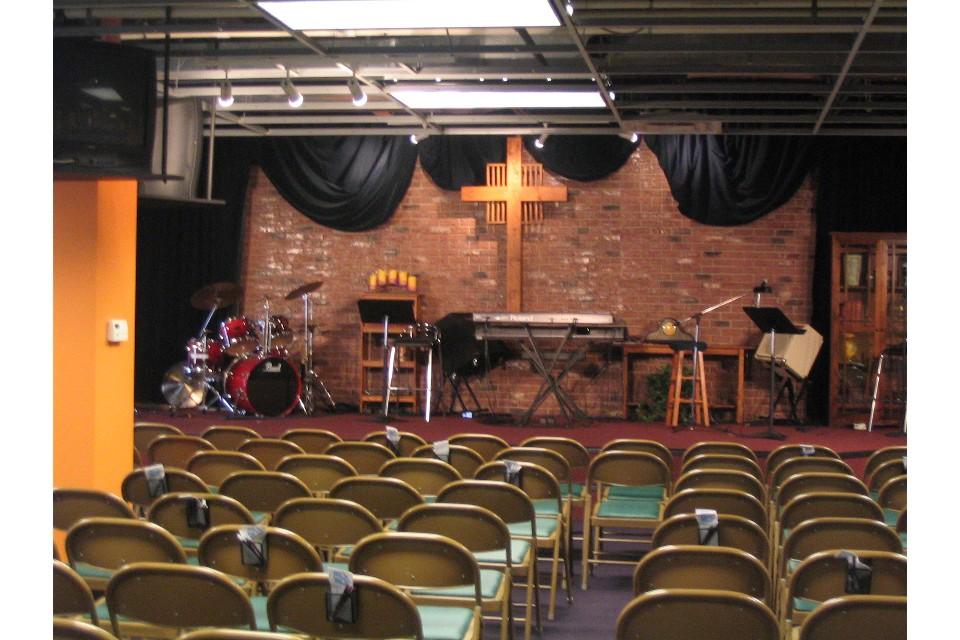 meet and worship in a rented school facility. The original core group meetings did meet in a school. That did not pan out for official launch for various reasons, so Fountain Park began to use an office building for worship. We actually have a very cool office space modified for worship, but in this corridor it is likewise very expensive. In order to be good stewards of the resources entrusted to us, we felt we must seek an alternate location. That location has been secured. It is a closed down Episcopal Church that we are able to renovate.
Here is where it really gets interesting in this missional discussion. The ink is not even dry on this paperwork and I have had to take numerous precautions to stop folks from calling this new building “the church.” (We are calling it simply our Worship Center.) Many even called the office rental “the church.” I wanted to take the bridge!
Why is this I asked myself? In reality, I do not blame anyone. There are numerous reasons, but here is a key one: Past experiences die hard. For even the “unchurched” the idea that the building was a church is deeply ingrained. It is something that is far more entrenched into the culture of this region than we care to admit. This is especially true in an area where the Roman Catholic Church claims as much as 1/3 of the church attendees in the area. (I have no axe to grind here, it is just a reality in my culture. Was it Kevin Crawley on his blog who said, being missional is exegeting the culture?) A much as I say I am reaching the unchurched I think in reality de-churched is probably a better term here. These “de-churched” folks as well as churched folks, who choose to be a part of us, all bring their former church to our location. It is hard to remind them that we are not recreating their former church, no matter what it was like.
Before this facility came into being in our life, I was asking this question over a cup of coffee with another missional pastor friend here. “Is it even possible to do missional ministry in the suburbs without a facility?” I am increasingly beginning to think the answer to that question is “no.” When reaching the 2.3 kid families, the suburban single parent and the empty nester here, it quite simply may take a “place.” It may not, but for us it may. There seems to be deep within the heart of the suburbanites in the US a deep longing for “sacred space.” Their lives are so incredibly busy that they are dying for some respite. That is why they have the country home, or the lake home, or the beach home, or just go camping. They are dying for a break from the rat race they have allowed themselves to fall into. (I will resist the urge to argue about the “hurried child” or the “living out daddy or mommy’s dream” syndrome here. But I will pick that topic up in the future!) Many have forgotten that the “up and outer” need Jesus just as much as the “down and outer.” And if we can help these get a vision for the poor and oppressed what kind of impact could we expect?
But what 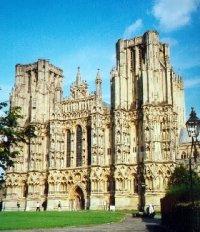 kind of a sacred space does it take? Do we really need a mammoth cathedral? Not that it is wrong, but do we need it? I am so much “less is more” when it comes to facilities and buildings. I see the needs in Africa and up the street from my home and I say “Should our money not go there?” But in reality, doing much of the outreach sort of stuff (read “missional” here) that is required in a suburban setting requires a place to do it. That means a building of some sort or another.
This has gone on far too long, but here is what I envision for Fountain Park in the future. We would like the present facility we are acquiring to become a youth outreach facility while we build a worship location somewhere else, a couple miles away. I then see us owning some land to build ball fields that are loaned to the community at no charge for their sports activities. We do not have a campus in one location; instead we have a presence in the entire community that is offering something. Some of this offering is similar to the church of modernity. (Let’s not throw the baby out with the dirty bath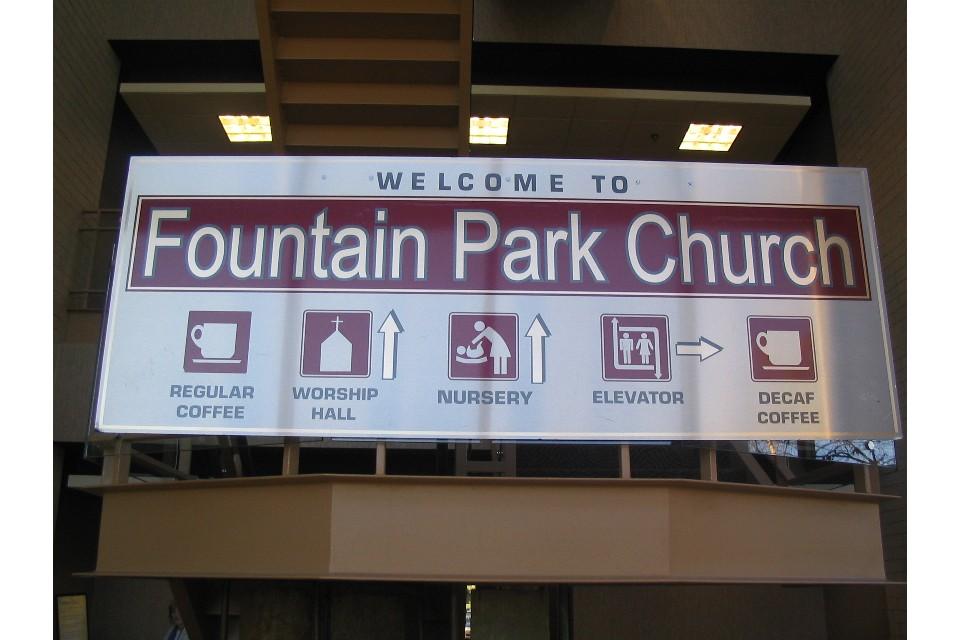 water.) We intend to allow community groups, support groups, etc. all over the facilities. Why not support AA, NA, Al Anon, Alateen and Jazzercise as we seek new ways to connect in and with our community? Could this not become an element of being missional that reaches men and women where they are? Could this allow our worship location to become a third place for some folks? Is this wrong if it can lead others to Jesus? Is this not a missional expression of the suburban church? At present, I am having a hard time answering that question with anything other than an affirmative answer.
Saturday, July 16, 2005
Missional in the Suburbs: Part 3 - Soccer Balls and Starbucks
 In many (not all) missional discussions, the suburbs catch a lot of grief. I am convinced most of it is unintended, for I do not know of a single person doing missional ministry that would imply that it is an urban issue. The same is true for it being a suburban issue or a rural issue or a racial / ethnic issue. Missional ministry is a kingdom issue. It crosses ALL boundaries.
That being said, my thoughts on the subject are still swirling around at the present. I have read the blogs of some others that are positively contributing to the mental flow. As I continue down this journey of what exactly it is to be missional in a suburban context, I did not want things to sit stale over the weekend, even if it is an incredibly busy one. So, I thought I would take a bit of time to talk in non-theological language about a couple of examples of being missional in the context that are purely pragmatic.
Frost and Hirsch, and others, take considerable pain to discuss the importance of the “third place” in the missional construct. Although hanging out at bars is a lot of fun, where I am placed it would be less that productive. There are options there, but as my Dad used to say, “I don’t understand everything I know about that.” But, here are a couple of things I have come to know.
A major “third place” in our setting is youth sport’s leagues. They are absolutely huge. I am astounded how many dads think their son is the next major league superstar. Oddly, they all criticize other Dads who feel the same way. (Smile here.) Earlier this year I began to feel that a major missional door was open to me in the sports leagues. Why should I not offer to coach a team? I have no children of that age, but it would still allow me to give back to the community without asking for anything. Therefore I became the coach of a girl’s under ten soccer team. (Read about it here in the March 9 entry.) It was an absolute blast! I got to know the girls, and through their daughters I was able to interact with parents. We did not have evangelistic prayer meetings after practice. In fact we never even prayed after practice. (Horrors! A pastor who refused an opportunity to pray in public!)
One of “my girls” was injured at home one day. When her mom informed me of the injury, I told her that I would pray for her. I later found out that that simple statement was HUGE for that girl. They knew I was a pastor, although I never did flaunt it, so she asked her mother if she thought I really would pray for her. Her mom said, “yes,” and well . . . I did. In so doing a relational connection was built. I may or may not ever see the fruit of that, but I am convinced it will bear fruit. After all, I am not the only instrument God has at work in this equation.
A second location where I am seeing good movement in missional suburbia is at  the local Starbucks. I am there often to work or meet folks so I am becoming known, not only to workers but also to customers. What am I doing? I am seeking to be in a third place to give relational mission an opportunity to take place.
Before I conclude this series of blogs I will share at least several other practical examples of where we are learning as a community of faith what it means to be missional. Part of that will be our leadership vision, our new worship location, and other community involvement opportunities we are exploring. This road may not be a newly paved one, but it is fun to travel. It is likewise cool to look around and see cohorts!
Wednesday, July 13, 2005
Missional in the Suburbs: Part 2 - Preview of Coming Attractions

A few weeks ago I spent several days with six friends of mine. During the days surrounding this trip I saw three movies. I was able to see Batman Begins, Star Wars and War of the Worlds. (I rate Batman the best of the three, but that is neither here nor there.) I am not sure why, but I am always amazed at how many previews there are in the theaters. A preview has as its sole purpose to get you to come see the upcoming movie.
It dawned on me that most churches today operate with that same procedure. We are guilty of sharing our “coming attractions” as a way of hoping others will join us for our “upcoming movie.” We even have a marketing strategy for our churches. Now do not misunderstand me, I am not saying that is ALL bad. My church does “marketing.” We do it primarily to encourage and support our folks in living their lives in the community. But I must admit, every time we talk about inviting someone to worship, my mind does a double take as to whether or not that is where our focus should be. I think the answer in a suburban context may be “yes, but not exclusively.” (More on that in the days to come.)
Fountain Park (the faith community I serve) is in the process in the upcoming days of completing the negotiations that will give us a new location for our weekend worship. A major part of this process includes the look of the facility in the community we find ourselves. This has caused my mind to go several directions. Most of the questions are related to the concept of being missional in the suburbs. Can you even do missional ministry in the suburbs without a facility? (I am beginning to think the answer to that may be negative, but more on that in future days as well.)
Most of the reading you do on the missional church has a distinctively urban flavor. But that is not the only place where missional should come into play is it? I asked two of the most respected authors today what their view of being missional in the suburbs would look like and I was surprised to see them hesitate in their answer. The answer that finally came was a spin off of being missional in an urban enviroment. Is this an issue that no one else has been asking? Do some of the best minds in the world not think it is possible to be missional in a suburban setting? Is this not an issue that we should be asking? (I know I intend to keep asking it.)
I am in no way wanting these upcoming blogs to be a defense of urban flight, or a defense of living in the protected environment of the suburbs, although that in and of itself may not be inherently right or wrong. I am simply saying it is a suburban setting where Fountain Park Church finds itself. If we believe the missional church is Biblical, apostolic and God honoring, and we do, we need to ask ourselves how we go about this in a suburban context that is distinct from and/or similar to an urban environment.
No answers yet. I am still asking the questions. But the answers must be forthcoming. They simply must.
Monday, July 11, 2005
Missional in the Suburbs: Part 1 - Don't Go to Church

If you read very much regarding church patterns and cultural interaction, at some point you will come upon the phrase “missional” as it relates to the church. As simple as that phrase should be, there is a great deal of baggage associated with it. Much of that baggage comes from the modern church’s use of the word “missional.”
In modernity, most of the church allowed the word to be reduced to reference to missionaries on foreign soil and US churches sending them money. (Okay, it is a bit more complicated than that, but that is the essence.) The Emerging Church in America is seeking to change that. We wish to reclaim the use of the word “missional,” to its right and true use. I actually wish there was another word that we could use to convey what we truly mean when we say being “missional,” but in reality, there is not. The word properly understood is exactly what we are about.
When you attend Fountain Park Church or any other Emerging Church’s worship gathering, you will probably hear the word missional thrown around. Here is what we mean. We are talking about taking Jesus into the world seven days a week, in our neighborhoods, to our work places, on our recreation events, hanging out with our friends, at concerts, mowing the lawn, . . . well you get the point. Being missional is truly about being Jesus with skin on all the time. It is no longer about being so attractive as a church that people will want to join. It is being so attractive as a follower of Jesus that people will want to know him. Being involved in a local faith community (like Fountain Park) is an outgrowth of the goal, not the goal itself.
A good pastor friend of mine has a shirt that reads, “Don’t go to church” on the front. The back reads, “Be the church.” That is being missional.
Tomorrow I want to address what I experience as a pastor of a suburban church seeking to lead my folks into a missional spirituality. It continually stirs me. I hope it will stir you.
Wednesday, July 06, 2005
Atrophy
While visiting with a friend of mine recently, I asked him about his wife. She is a relatively young 50 year old. However she suffers from osteoporosis. This can be devastating on some women. She is one such case. About 18 months ago she broke her hip. The recovery has been a long and very difficult road. She is currently about 80% healed. This healing has come in plateaus of which the 80% plateau has seemed to take a long time. The other issue she is wrestling with is the issue of muscle atrophy. She has always been a very active person, and to have this issue has been extremely difficult.
Atrophy sets in from a lack of use. I recall being hospitalized for a week many years ago and being astounded how quickly the muscles lose their functionality when not in use. The only way a muscle grows is to use it. The way it becomes stronger is through use. The way it increases flexibility is through use.
How about our spiritual muscles? Are we using them? Are we praying? If not, do we lose our “edge?” Are we reading and studying Scripture? If not are we losing ground?
How about our church? How about any church in their community involvement and engagement? Folks from our church spent most of the 4th at a local community day being visible and supporting the community. We are doing the same at an upcoming Cancer Fund Raiser and awareness event and at another charity event in our area. If we do not practice being “missional” in our community, our muscles in this area begin to atrophy. We lose our “edge,” as it were. We easily forget why we are here. I can name a hundred churches that are now seeking to survive rather than advance into the community. Their muscles have atrophied. Their entire existence is based upon what they want or need instead of those on the outside being welcomed in.
We are not here to serve ourselves. We are here to reach and help others. Everything we think of in relation to the church (prayer, worship, etc.) can be done better in heaven than on earth with the single exception of reaching out to others and providing care for their physical, emotional and spiritual needs. Let’s not let our muscles in this arena atrophy or we easily lose our reason for existing as a church. The only way we stave off atrophy is through use. The implications are many.
Thursday, June 30, 2005
Vacations
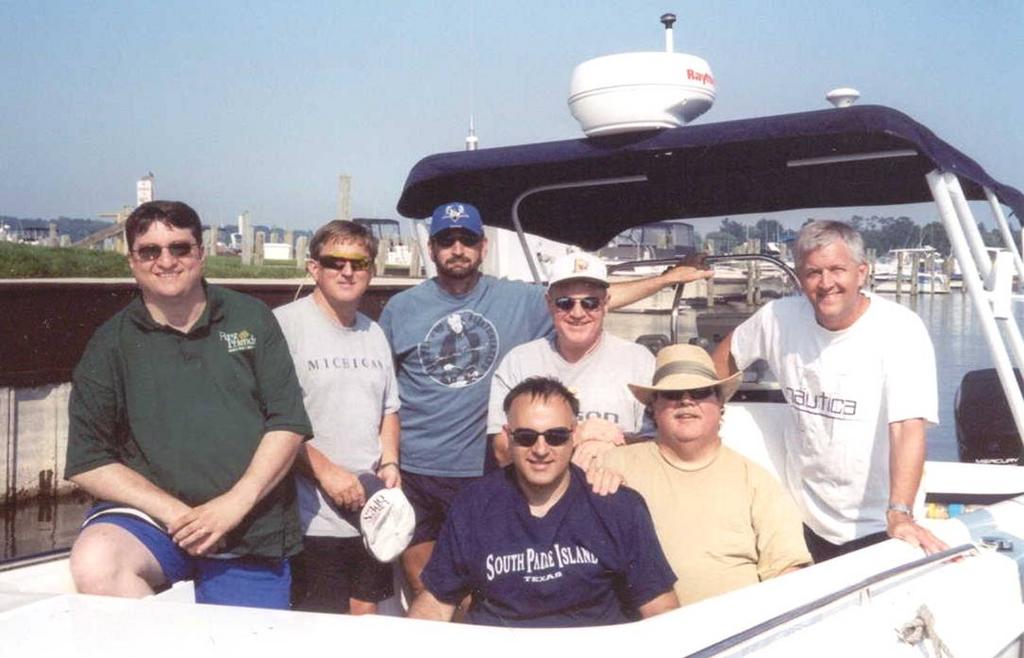
I am writing this sitting in a cottage beside a small interior lake just outside of Grand Rapids, Michigan. I am here with six friends of mine. We get together twice a year, once at the end of June and again the week before Thanksgiving. Each of these men are pastors from all around the Midwest. That means we not impressed by one another’s “minister stories!” We have been friends for over a decade and have similar experiences. We hang out, go to movies, unpack ministry experiences, go for boat rides, ride jet skis, play golf, eat, and talk. We actually talk a lot. It is an encouraging, healing, challenging time. And it is just plain fun. I look forward to these trips. Although it is not a vacation, it definitely carries some of those traits.
Why do we enjoy vacations and times away? Are they valid? Or have we become a bit lazy? I think a clear understanding of the importance of vacations and rest comes from the life of Abraham. It is found in Genesis 21:22-34. In this passage Abraham “complains” to King Abimelech concerning a well at a place called Beersheba. The well was in fact a place of refreshment and rest in that land of dust and scattered water supply. There are three lessons for me about a time of rest from this passage.
1. It was worth a confrontation. Abraham “complained” to Abimelech concerning this piece of ground. This was important to him. He thought it was important enough to risk a confrontation with Abimelech.
2. It was worth paying a price. Abraham paid Abimelech seven female lambs as a sign that a treaty had been signed, and the well at Beersheba belonged to him. Remember in that farming culture, livestock was currency. Female lambs were valuable; they could bear young. Abraham was willing to pay a high price for a time and place of refreshment.
3. It was worth expending energies and resources to improve it. In Abraham’s case he planted a Tamarisk tree. Now, in reality a Tamarisk tree was a shade tree. Abraham took the time to cultivate and plant a shade tree in the location he had confronted and bought. It was that important to him.
Lessons for us are clear. Where is our time of refreshment? Are we willing to confront or at least request it? It may be a regular day off or the normal vacation you are allotted but it is well worth the time. Risk it.
Are you willing to pay a fair price for this? That may mean that you give up something else to get this time. It could be some pay or some time at the office that is productive. The question is, are you willing to pay the price? And what is the limit of the price you are willing to pay?
The final question, are you willing to work to improve it? I had to make some plans and do some advance work in order to prepare for my time away. You may need to work on your schedule in order to fully get the benefit of a day away from the office, but are you willing?
We must spend time recharging our batteries. The bow that is always bent does not shoot the truest arrow. It must be relaxed between shots, or it is ineffective. When do you relax the bow?
Thursday, June 23, 2005
Bravery

When we think of bravery most of our minds travel in specific directions. That direction is quite often associated with wartime actions or local security scenarios that include the police or the fire department. It could at times involve a family emergency situation where a parent rushes into a dangerous situation to save a child. Be honest now, how many of you hearing bravery think of Mel Gibson in Braveheart or the firemen at the Twin Towers on 9/11?
Let me tell you a couple stories of bravery. When my son was two years old he had to have surgery. I recall sitting in the hospital with him on my lap while they drew blood. He looked at me with tears in his eyes as I held him and he acted in brave fashion. It has been exhibited in actions twice now by my grandson Gavin whom I wrote about yesterday.
A little over a year ago as we began this ordeal where we have been concerned with his lack of growth, Gavin sat on my lap while they drew blood for the first round of blood tests. Yesterday, he did it again. This incredibly brave little boy sat on his mother’s lap while an IV was inserted and then he lay on a hospital bed for two and one-half hours while on 18 different occasions blood was taken to monitor the results relating to his pituitary gland stimulation tests.
Here is where Gavin’s situation and my son’s are distinct from the ones mentioned in the first paragraph. Each of those two little boys had absolutely no understanding of what was taking place. A wartime or police or home act of bravery is made with knowledge and then action disregarding the risk. Gavin acted with great bravery while not understanding the risks. His bravery was a result of his trust. He trusted those whom he loved to be doing what was for his best.
Have you ever thought that trusting God to be about our best in situations we do not understand is an act of bravery? How often do events happen in our life that we do not understand? Daily? Weekly? Monthly? Annually? Yes? How do you respond? Do you look up with teary eyes into the face of your heavenly Father and trust – even though you do not understand?
Bravery. That is what it is. Do not let anyone tell you otherwise. Some will argue to call that faith. I challenge us to really analyze if there is a difference.
We will not know the test results from Gavin’s tests on Wednesday for 2-3 weeks. For now he is playing at the playground, observing the world around him, quizzing each of our behaviors and in general making the world a better place because he is in it.
Those who love Gavin on the other hand are praying and planning next moves. But for now we wait. Is this a test of bravery on our part? Perhaps. We are indeed looking up into the face of our God and trusting when we do not understand. However, in my opinion, it pales in comparison to the bravery of Gavin.
Wednesday, June 22, 2005
Fearless and Helpless
My 2-1/2 year old grandson's name is Gavin. He lives with my wife and me as he has since his birth. We have legally adopted him, prompting me on more than one occasion to quip; "Now I am a true southerner. I am the father of my grandson." That makes too light of a difficult situation. It is a situation with difficult choices made by everyone concerned. Each of us (my wife, my daughter and me) wrestled with the right thing to do and the right reason to do it.
I have one other grandson Gideon who lives in Knoxville, TN with his dad Richard, my son, and his mother Priscilla. Gideon is six weeks old. There will be a third grandchild in August. I am too young for this stuff, but that is beside the point.
Gavin is fearless. He will jump anywhere, climb anything and tell you to "go way" if you try to assist. This happened when I was swimming with him for the first time in his young life on vacation a couple of weeks ago and the past Monday when he was climbing at a playground near our home. I love this little guy more than I could ever truly tell you. I will love my other grandchildren just as much, but something will always be unique about this first one and the fact that he lives in a lot in life he did not ask for.
In most every way Gavin is a normal two year old. There is one exception. Gavin is very small for his age. He is only 22 pounds and 32 inches tall. (I think those numbers are correct. If they are not my wife or daughter will post a correction in the comments section.) He was very small even at birth, 5 pounds 1-1/2 ounces. He was premature by a month. Because of his small size and no embryonic fluid they took him at eight months. Trauma was expected, so when he was born the room had specialists swarming all over. Thanks to the grace of God, he was perfectly healthy and they just wandered out of the room.
As I said, he remains small. He is below all charts on his weight and height. Gavin has a small appetite. Because he is not growing, he only needs to eat enough to live and do normal two year old running and playing sort of things. This size issue has troubled pediatricians his entire life. It has not bothered us as much because I was always small when young. In the eighth grade, I was next to the smallest kid in the entire school. Today I am 6'1". But they are very concerned for Gavin.
Tomorrow medical personnel are going to attempt to intervene. Shortly after 8:00 a.m. Wednesday, June 22, 2005 the physicians at Children's Hospital in Pittsburgh are going to do a 2-1/2 hour intravenous procedure to attempt to stimulate his pituitary gland and hopefully cause growth. This procedure requires him to not eat or drink anything in the morning and to be still for the entire 2-1/2 hours. That is asking a lot for a kid his age.
Tomorrow morning, this fearless little boy who is loved dearly by everyone in the family will be helpless while medical procedures are performed on him in his best interest. There is a lump in my throat as I write this late on Tuesday evening. Or should I say early Wednesday morning? I have a lot of love for a lot of people, some incredibly so, but tonight my love for Gavin surpasses almost everyone. I am headed upstairs in a moment to kneel by his bed while he sleeps and beg God to heal my precious Grandson and to be with him tomorrow as he undergoes pain and discomfort that a two year old simply cannot understand. We are planning on selling our home soon to among other things, help pay for the anticipated non-insurance covered cost for this procedure. They promise to be quite high. But you know what, it does not matter. Gavin is far more important.
In addition to being fearless, Gavin is one of, if not the, cutest little boy you will ever meet. But his being cute and fearless tomorrow morning will do him no good. He needs God to heal his little body.
Do you realize that in God's eyes, we his children are cute and helpless? We are destroyed and dying from a disease. The disease is sin and we cannot cure it alone. We need the intervention of someone far greater, someone whom we often call the Great Physician. That person is Jesus. Your Heavenly Father cares for you in a manner that far exceeds my love for my grandson Gavin.
As you read this, I ask that you would breathe a prayer for Gavin James Mann. Even if you read this after the procedure is over, pray for God's will and healing. God still heals. Usually he does it with the aid of MDs and medicine, but it is God who heals. I also ask you to pray for yourself if you have never received this wonderful gift of spiritual healing. God offers it freely. As Gavin receives injections that may cure his body, is today the day you could accept the injection of life that could cure your entire being . . . body and soul?
I now am headed to ask God to do what I cannot. I fully trust in the outcome. But I must wait for some time to see the result. So my prayer will also be for me and my family during these difficult days, weeks and months of waiting.
Friday, June 17, 2005
Salt Lake City – Day 4
Yesterday was my birthday. I did not allow anyone here to know. I received some calls and emails from folks back home, but for the most part I celebrated alone. That is not a whine, it was a choice. I did not want anything taking place here to be about me. Appropriately enough last night during worship there was a brief time of quiet when we were asked to recall when God called us into ministry.
For me, that occurred in my teenage years. I have never written here about my coming to faith, and am not now, that is not my purpose. Suffice it to say that I came to faith at the age of eleven. A couple of years later I attended a summer camp with some friends from my church. I must have been 13 years old. Each evening we would have a worship service they called Vespers. (That is a name I do not really get to this day. I know it comes from a basic meaning of Evening Prayers, but to call a teenage worship service by that name, well . . .) In any event, Thursday or Friday evening of that week during Vespers the speaker used as his text Romans 12:1-2.
Therefore, I urge you, brothers, in view of God’s mercy, to offer your bodies as living sacrifices, holy and pleasing to God—this is your spiritual act of worship. Do not conform any longer to the pattern of this world, but be transformed by the renewing of your mind. Then you will be able to test and approve what God’s will is—his good, pleasing and perfect will.
At the end of his message, of which I recall little, he challenged us as young teens to give our life over to God for whatever He may have for us. I recall going forward and talking to one of the counselors. That night I prayed and told God I would do or be whatever He desired me to do or be. This was coming from a teen living in a very poor home, who without God’s help would remain there. I verbalized the specifics of my call to my Dad 2-3 years later, had numerous folks in churches (once our family started attending a couple years later) tell me that I was gifted to ministry. But full time – not bi-vocational – ministry did not come my way until 1994. What caused me to hold on? I was called. Nothing more. Nothing less.
Last evening I recalled and celebrated God’s call upon my life! There are many times when this call is the only thing that keeps me in ministry! So I say again, last evening I recalled and celebrated God’s call upon my life.
Thursday, June 16, 2005
Salt Lake City – Day 3
Today was a very unique day. The schedule is purposely set up with some free time so you can hike, nap, talk, or whatever strikes your fancy. I decided to take a tram ride to the top of the peak here. Our lodge is at 8,100 feet in altitude. The tram took us to 11,000 feet. From that point the view is absolutely breathtaking. The beauty and wonders of God’s creation astounds you! There is still a lot of snow. Skiing is still open until July 4 for the die hards. There were 1,000 skiers up here last weekend I was told.
As we rode up I was aware of the vast number of places where water was draining as the snow melts in the heat that is presently 85 at the base and 50 at the crest. This was my first experience of watching drainage of this proportion due to melting snow. Once we were at the crest and I looked out over the beauty of the Rockies I was taken with the old Rich Mullins song, “Awesome God.”
Our God is an awesome God
He reigns from heaven above
With wisdom, power, and love
Our God is an awesome God
As I complete day 3 here, I rest in the fact that our God truly is an awesome God. You too my friend should rest in that fact. I do not know what you are facing today. But I know the God we serve. As they used to say in my Baptist days, “I may not know what tomorrow holds, but I know who holds tomorrow!”
There is nothing . . . nothing I can or should add to that today.
Wednesday, June 15, 2005
Blogging About Blogging
Last week the husband of one of my staff members gave me a copy of Business Week. (Thanks Ray!) It was the May 2 issue. The cover story was about blogging and its affects upon business. This morning USA Today has a long article in the front page of the “Money” section on blogging. Obviously something is up with blogging. You are aware on some level because you are reading this one.
“Blog” is short for “Weblog.” It is a combination online journal, commentary, critique, review, etc. The first blog true blog did not come into existence until 1999 and yet blogs are taking the Internet by storm. Blogs can be online communities, safe chat areas, and discussion groups as well as digital journals. Blogs seem to be making the World Wide Web truly a World Wide Web.
Here are some amazing facts as they relate to blogs that I found in those two articles alone. (If you wish to learn more, pick up a copy of the book by Hugh Hewitt entitled Blog.)
* There at 8.5 to 9 million bloggers presently online in the US
* There will be 10 million blogs in the US alone by the end of this year
* 40,000 new blogs come online each day
* 57% of bloggers are male
* 48% are under 30 years of age
* 42% earn more than $50,000
* 39% have college or graduate degrees
* 82% have been online in one form or another for six years of more
* In November of 2004 7% of Internet users had a blog but 27% (32 million) read them. I wonder what the numbers are in June of 2005?
My first blogging experience came in 2001 when my former church had a web site we were trying to figure out how to maximize. In June of that year I was sent to our denomination’s national assembly as a representative from my area. Each evening, at the end of the day, I would send home a journal/commentary about the day’s events. This was then edited (I need editing anyway and these were very emotional pieces written late at night after 18-20 hour days.) The church and community ate these up! Our web site got more traffic that week than the rest of the year combined if I remember correctly. What I was doing was in essence was an early form of blogging.
Some of you are still saying, “So what? It is just digital ramblings and stuff of no importance.” I would recommend you do your homework on this one. Blogs are huge. They had an impact on last year’s presidential election and have been cited on the floor of Congress. There are many today who have crossed lines in their blogs and have lost their jobs. There actually is a term for that. It is called being “dooced.” It refers to losing your job because of something you wrote on your online journal regarding your employer or business.
Think about it another way. As I wrote two days ago, we are in an age of information. It is incredible how much is out there. Do you realize that most of it is digital? Digital cameras, text messages, digital photography, Power Point presentations at work, visual images in church worship, all government forms, insurance forms, online banking, digital bill payment, on line purchases, iTunes, e-bay, Amazon, etc. etc. etc. and I have not even talked about normal web surfing!! I do probably 95% of my sermon work digitally.
The author of the article in Business Week rightly points out that “the overwhelming majority of the information the world spews out every day is digital.” Blogs are just another form of that, albeit a form that is exploding. Businesses do not fully know what to do with them yet. Blogs are already used for marketing, and public opinion.
The question is being asked, “How does business change when everyone is a potential publisher?” The days of preparing a manuscript, sending it to a publisher, waiting on them to approve and edit then finally going to print months or years later may be nearing an end. Blogging gives you the potential to publish instantly! I wrote this blog at 7:00 MDT on Wednesday, June 15, 2005. When are you reading it?
Finally some of you are saying, “Okay Matrixminister, I will give you that blogging is a big thing but what is the big deal as it relates to the church?” I am glad you asked!!!
I started my blog at the suggestion of my closest pastoral friend in ministry. (Link to Terry Timm on my side panel to learn about him.) After talking to him at our bi-weekly debriefing coffee time, I decided this could be a great instrument to aid my church. Folks could learn about me as the pastor, hear what I think, and read issues on my mind. I could talk about things that I may never talk about in a message on Sunday morning. Fountain Parkers could use my blog to let folks they are inviting to participate with us learn a bit about us. They could do this in their own home with a cup of coffee or seated at the local coffee house.
If you read my archives, it has gone way beyond that. I have been astounded at the impact this blog has. Tracking software tells me there have been 5,000 readers on my blog. As best I can tell there are close to 300-400 readers whom return with some degree of regularity. All of this came with minimal real exposure. Most readers have no connection with Fountain Park Church at all! My blog gives them a sense of connectedness to our church on a safe level until they are willing to venture deeper.
I have plans in place to move my blog (archives and all) to http://www.matrixminister.com/. Do not look, it is not there yet. I need someone to teach me some more advanced HTML so I can edit Wordpress or b2evolution interfaced with Dreamweaver. This move will make my blog much more accessible and easy to locate.
Here is my challenge to folks who belong to Fountain Park. (I did not say folks who are members; that really does not matter. What matters is do you feel you belong?) If the blog is so powerful, why don’t you get one? Why don’t you post weekly or so about things you see going on. Link to me. I will link to you. We build a community and thereby invite others to join us.
Blogging is not hard – really! I did it and I am no genius. You do not have to take it to the level I have. You can use Blogger, or Typepad or Xanga or any of the other online blogs out there. All of them will give you basic templates and you can be up and running in no time at all!
“Terry, I cannot write like you. God did not gift me that way.” You do not have to. You are not me. Just write as who you are. Be genuine. That is basically what I am doing. I try at times to push people’s buttons and will again, but that is just me. You do not have to do that. Be yourself! Be respectful. Be Christlike. Do not slander folks or ideas. But write. You will be scared at first. That is okay. It can be intimidating. But as Nike would say, “Just do it!” The impact for the Kingdom can be huge! And, you like me, will grow in the experience.
Salt Lake City – Day 2
When my kids were small, they had a toy that would play the song “It’s a Small World After All.” The song is used by Disney to talk about a child’s world of small things. We as adults use the song a bit differently. We are usually referring to the close connections we find we have with others, or seeing someone we did not expect to see. For me the latter has come to be very real while here in Snowbird. I have met the brother of a pastor friend of mine in Pittsburgh and another pastor who now lives in Michigan but used to serve in a church five miles from my previous church. It is a indeed a small world and I am not talking technology.
__________________________
This morning we had our opening plenary session. The speaker was Jim Griffith. He is in his late 50s and has planted 5 or 6 churches. He now serves as a coach for New Church Developments and judicatories that are assisting in planting churches. His talk this morning was the Ten Most Common Mistakes New Church Starts Make. It is copyrighted so give him credit for most of this. I will not mention all ten mistakes, for some did not really apply to me or Fountain Park. But three were very applicable.
#1 Pursuing the Great Commission while neglecting the Greatest Commandment.
This is no doubt a very real danger for folks like me. His joke was that the AAA on his bumper sticker is not an auto club, it is a personality type. I could really identify with that. Here is a key question he asked, “Am I a church planter trying to love God or a lover of God trying to plant a church?” This really gets to the core of the issue. I must as a pastor of a new church be sure that I love God with all my heart, soul, mind and body first. If not, nothing else will matter.
#2 Failure to take Opposition Seriously
Prayer and Fasting cannot be a phase in the life of a church, it must be a lifestyle. There are four kinds of opposition he mentioned.
Tribal Opposition – This is opposition from other pastors and churches. I intend to write about this in depth in the future as it relates to my church, but it is very real in my life right now. I must admit I want to take the guys outside and show them how we handled this stuff where I grew up in North Carolina.
Cultural Opposition – Some areas will not be glad a church is there and growing. They are not happy to see land come off the tax roles.
Relational Opposition – Some people in churches get very close and then turn on you. Get ready for this will happen. This is opposition you never recover from, and you never should. We are to be about relationships, so this will happen and it will hurt.
Spiritual Opposition – We are not battling the people, local municipalities, other churches or pastors. This is not a flesh and blood conflict. It does not matter whose lips are moving, this is spiritual warfare. Do not expect the enemy to just say “Come on in!”
#3 Failure of a Young Church to Act their Age
Jim sees this as the number 2 human reason new churches fail. (#1 is Premature Launch.) We should not try to look and act older than we are. Babies do not go to school. There is behavior for babies that is normal. To dress them up as adults, does not make them an adult. There are some ministries that we are not going to be able to provide. Do not pretend we can. Do not promise and not come through. This violates trust. Instead simply say, “I am sorry but we are unable to provide this at this time.”
Now on to other work, then hit the sack for tonight and get ready for day 3.
Tuesday, June 14, 2005
Salt Lake City – Day 1
For years I served in a business that required a lot of telephone time. There were some folks that I would talk to 3-4 times daily. Many of them I never met in person. There were some business associates that I did get to meet. I recall that in almost every instance they looked nothing like the vision I had in my mind’s eye. Have you ever had a similar experience? We get this image in our head, and the other person does not match it.
Yesterday after landing at the Salt Lake City airport, I picked up my rental car. I left the airport to drive to Snowbird, Utah where our conference is being held. (You get really good rates at a ski resort in June!) After stopping for dinner, I began my ascent up the mountain. By this time it was dark. I was very careful since this was an unfamiliar road and to go off the side I knew could be treacherous. After a 45 minute drive I arrived at my destination, parked the car, checked into my room, and wrote last night’s blog. I then went to sleep.
I woke up this morning to go get some breakfast and as I looked out my hotel window and walked to the restaurant I was taken by the beauty that surrounded me. Here it is June and I was looking at breathtakingly beautiful snow capped peaks. Last night I was imagining what it would look like. This morning I was seeing it for myself! Just like the phone calls I mentioned earlier, my vision and reality were not even close.
As you read yesterday, I am out here for a conference. For the most part I like educational conferences, but I am not a junky by any stretch. As much as I enjoy sitting and listening to a speaker teach me something I do not know, I much prefer the times of sharing with other pastors and learning together. After day one of this conference, it is apparent that I will be getting some of both this week. Of that I am glad.
The first worship session tonight was led in total by African Americans and reminded me a lot of my younger days in white Baptist Churches. Tonight was a worship time of encouragement and challenge. Leading a new church is by far the hardest thing I have ever done in ministry, so tonight to get a shot of encouragement was good medicine.
After this meeting I had the opportunity over dessert, to talk to a young pastor in his first pastorate about the challenges related to ministry. As I listened, shared, offered ideas and asked questions, I realized anew that I love helping younger ministers – men and women. About 7-8 years ago I felt that God desired me to invest a portion of my time in the lives of younger men. Tonight as I talked to this pastor, I was reminded of that.
Monday, June 13, 2005
View from 30,000 Feet
I sit writing this at midnight on Monday evening MST in Salt Lake City, UT. I am here this week for a New Church Development Conference being put on by my denomination. My intentions are to blog my thoughts all week. This will probably mean at least five entries in the next five days, perhaps more since I have a list of things I now wish to blog about.
In order to arrive here in Salt Lake City it took two flights, both about 2-1/2 hours in length. The first flight was to Dallas and the second to my destination. On the second leg, we basically flew along the entire length of the Rocky Mountains. If you have never seen the Rockies from the air, it is a truly amazing sight. This beauty of God’s creation was in my view for over 60 minutes. Beside me sat a young man from Boise, Idaho who was telling me the names of many of the peaks. (Not that I can recall a single one!)
I have lived my entire life on the East Coast and very close to the Appalachian Mountains. I have hiked the Appalachian Trail and camped in the wild. Three years ago I rode my bicycle the entire length of the Blue Ridge Parkway. I have seen this mountain range from about every angle. It is indeed very different from the Rockies. I do not mean just in shear height, although that is indeed one difference. From 30,000 feet it is very clear that the two ranges were formed in very different types of creative activity. The Rockies are sharp, steep, edgy, rocky, (hence their name) and full of cliffs. The Appalachians for the most part are rolling mountains, full of forest, wild life and greenery. It is true that both ranges contain wild life, but here again; it is different because of the differing terrain. Both are God’s unique beauty in their own special way.
But that is not my point in this blog. This is. As I flew over the Rockies I thought: A couple of hundred years ago, settlers were traveling across these same mountains. They had crossed the Appalachians only to face a thousand miles of basically flat land in the Midwest. Then as they would leave Kansas or Iowa and move into Colorado or the Dakotas they would see looming in the horizon a sight they were totally unprepared for . . . the Rocky Mountains. Almost to a person the only mountains they had ever seen were the Appalachians. Nothing in their past could have prepared them for the vast wild area of the Rockies. There was no frame of reference for them to understand what they were about to encounter. The mountain ranges are totally different. The lessons from one range would not translate easily to the other.
Here is my point. The Church of Jesus Christ is facing a future that is different than anything we have ever faced in our 2,000 years. There are more people alive today than have been alive cumulatively for most of the planet’s history. We are facing an earth that is becoming smaller by the day. The days of isolation are history. Technology has made information available in quantities that could not even have been dreamed of earlier in the church’s history. Men and women are becoming increasingly pluralistic every day. Faith is a cafeteria. Pick and choose what works at any given point in time. Next week, next month, or next year you can always change. The list could go on, but the point is obvious.
If we as the church are facing the Rockies after crossing the Appalachians and the plains, we will need to operate differently than we have in the past. Let’s be honest here. It really does not really matter what Christian talk radio, periodicals, or preachers say, most of our culture really is not against the church. They do not see the church as the enemy at all. Oh, that it were that simple. The issue is far worse. In truth, they see the church as irrelevant. They do not see the church as a player at all in the big scheme of things. That is far worse than being perceived as the enemy.
As I write over the next weeks and months, I want to address what the church is going to have to do if we are going to cross the Rockies. My thoughts will not be unique or original with me, but I believe they are true. Stay tuned. The lessons learned in one mountain range do not translate easily to the other.


