On my recent trip to Africa, I disciplined myself to keep a daily journal of what transpired and how I felt about it. These entries are from that journal.
Monday, October 24, 2005
Experience #1 – Time Spent with Sponsored Children
Each morning we met to begin our time together with devotions. Joshua shared some challenging thoughts from Isaiah 61 and Luke 4. After devotions we prepared to drive to visit our sponsored children. We would be leaving in two separate vehicles going in two separate directions. As we prepared to depart, I noticed that each morning after we had driven in every imaginable mud road the previous day, the Area Development Project staff had washed the vehicles. I commented on that to John and he said, “Yeah. They take good care of these vehicles.” Once again, I was very impressed with the World Vision staff here in Africa.
Visits to our sponsored children were pretty incredible experiences. There were four children that we had to visit. In two cases we were going to pick them up at school and drive them home to meet their parents. We talked about how strange this must have looked to the children. The parents know their children were going to be sponsored, but there was a lot of explaining ahead of time regarding what “adoption” and “sponsorship” actually mean. Many parents, understandably so, desired assurances that their children would not be taken away to America. Fair enough. Now imagine a four wheel drive with two white men, showing up at their school, and driving away with one of the children. The adults all knew the scoop, but I am not sure the children di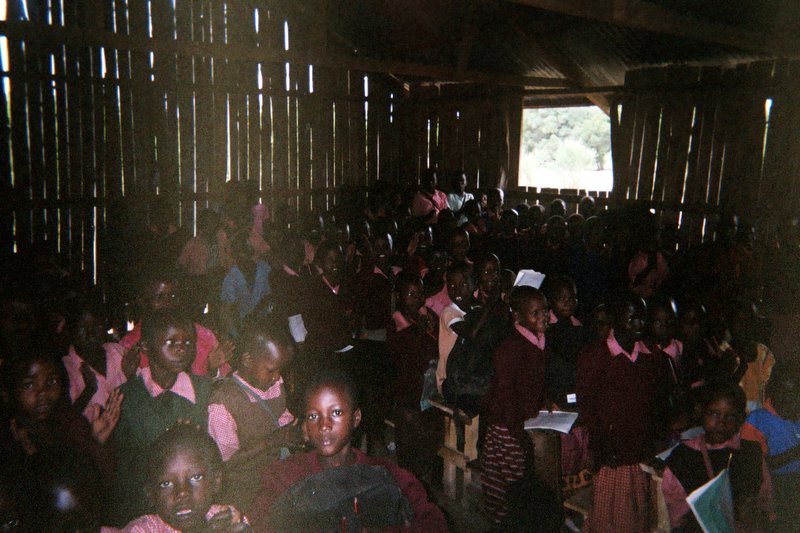 d.
d.
Before departing, the school we visited classes. Here is a sad point; the children were literally CRAMMED into the classrooms. My best count there were 110-120 kids in the level 4 class we visited. Imagine three rows of ten desks with four children at each desk!! I could not help but think about how many teachers in the US talk about they have 25 kids and it is too many. I am not disputing that, I am just saying, imagine 120!!!
Ole Masi, asked the kids how many of them were seeing a Muzungu for the first time. (I am a Muzungu. A Muzungu is a white man!) At least 45% of the kids raised their hands and laughed aloud. It was a truly great moment for me to raise my hands and say, “I am just like you!!!” And I am. The only difference is skin color. Inside we are all alike. We are all children of God. We are all loved by God equally. We are alike!
After our visit to the first family, we took the boy back to school. They were so excited to see us back. It was recess, and we then did something really crazy. Gary had brought a Miami Dolphin’s nerf football for his child. (Gary is from southern Florida.) We got two teams and taught them to play American football for about 15 minutes. It was a hoot!! They absolutely loved trying to learn the game. I had one interception but it ended a tie game. We did not bother with sudden death overtime. Since we had introduced our African hosts to M & M s the night before, we joked that in ten years, we will see the Kenyan national football team sponsored by M & Ms!!
Wednesday, December 14, 2005
Out of Africa: Part 8 – Final Full Day
Tuesday, December 06, 2005
Out of Africa: Part 7 (Continued - E) – African Worship & Community Needs
On my recent trip to Africa, I disciplined myself to keep a daily journal of what transpired and how I felt about it. These entries are from that journal.
Sunday, October 23, 2005 – Experience #6 – Conversation Becomes Graphic
Here is a warning!! This discussion will be quite honest, open and perhaps graphic. Please do not be offended. I intend to be open as long as I am not profane or vulgar. The church has a long history of skirting the discussion of uncomfortable topics. This will be just that for many folks. If you feel that way, please feel free to simply exit the page and return at another time. I have to hope that search engines do not pick me up for pornographic searches as this discussion unfolds.
Many cultures, including America, have set up circumcision as a rite of passage. For the ancient Israelites it was ceremonial and performed on the male child’s eighth day alive. This was for them the time the child was officially given his name. Other cultures have made this procedure a passage into adulthood for the males. This is the approach the Masai have taken.
When a Masai male is circumcised it occurs in their early teen years. It is a major cultural ceremony. The procedure is performed in a public ceremony. The entire village is invited and usually attends. When the circumcision is done, the male is not permitted to cry or shed tears just as at the removal of the two front teeth. If the young man does not cry or shed tears, he will be given a cow by every herdsman present. This could mean he will receive as many as 20 to 30 cows as gifts at the passage into adulthood. It is no small matter to be given a cow since they are so revered in this culture.
If a young man decides to move on to being a Muran, which is a Masai warrior, they should keep themselves pure. This in many cases means they will not have sexual relations until the age of 35. It is no wonder that many of the tribes in Africa are surpassing the Masai in sheer numbers. The number of men who take this route are becoming fewer and fewer. Some simply break the code and do not tell anyone.
Late in the evening we talked to our host Simon Sole Masi about Female Genital Mutilation (FGM) and the need for the empowerment of women in this culture to fight HIV and other social issues. Other than HIV education across the culture, which is primary, a key issue in combating HIV is the empowerment of women. Female Genital Mutilation, or female circumcision, is therefore another major issue in the empowerment of women in some African cultures. (If you do not know what FGM is, you will if you continue to read this entry.) FGM is actually illegal in Kenya, but so is the arranged marriages of young women to older men. Yet, it does not stop both from taking place. (I will write a bit more on the arranged marriages later in this entry.) Things that are that culturally entrenched, die very hard!
When we first asked Simon Ole Masi about this issue he said, “Thank you. I am very glad you asked that question.” It turns out that he did his Masters thesis on that subject in England. He chose that topic because it has almost 100% prevalence among the Masai people and he is Masai himself; so he sought to fully understand it. Ole Masi personally interviewed hundreds of men and women to see what he could learn about the cultural phenomenon.
The first question we asked him was to us the most obvious: “Why?”
It turns out there are three basic reasons in their culture. The first reason is that it is seen by many as a parallel to the male circumcision. It is the passage into womanhood for the female. The second reason is that the female clitoris is viewed as dirty just as the male foreskin is viewed as dirty.
The third reason is the least talked about and the one that in many cases is a control issue by the males. Masai, as I have stated, are herdsmen. This means they are gone from home with the cattle a great deal of the time. If sexual intercourse is not pleasurable, or in many cases is painful, there is little reason for the female to be unfaithful to her husband. This makes the sexual act purely for male enjoyment and a procreative act for the female and ensures her faithfulness.
He later informed us that this is another reason some of the women want a maternity clinic. Some women who manage to avoid this hideous practice, will have the procedure performed on them by a midwife during the birth of their first child. At that time they are in pain and do not know what is taking place. After they heal and realize what has been done to them, it is too late. It is almost as if the older women are saying, “We went through this and you will too.”
I probably should not close this entry without (as promised) explaining what FGM is. We asked that very question, “Exactly what takes place?” Ole Masi said that in his studies he discovered that there are actually four levels of FGM practiced worldwide.
Level 1 – This is the level practiced by the Masai. In this the procedure involves the removal of a portion of the female clitoris. This is similar (sort of) to what is done to the male in circumcision, except that in the male, it does not reduce the enjoyment of sexual activity. That is the case with women. Women who have this level of procedure can still achieve orgasm during intercourse and sexual activity but enjoyment is reduced.
Level 2 – The entire clitoris is removed. It is practiced by some African tribes and some Muslim cultures.
Level 3 – The entire clitoris is removed as well as the labia minor. Extremely painful it would seem. This is practiced almost exclusively by some Muslim cultures he said, although there may be some exceptions.
Level 4 – This is the most gruesome of all. The entire clitoris is removed as well as the labia minor and the labia major. The vaginal opening is then stitched closed except for an area to allow the passage of urine.
As I said . . . hideous!
One final area we talked about was the arranged, and usually forced, marriages of younger Masai girls to older men. There are times where a younger female has kept herself from sexual activity and is free of HIV. Yet because of a sum of money paid to a father, the girl will come home from school and see family all around. She will be told to greet them and next thing she knows she is married to a much older man (many times 60-70 years old) who quite often is HIV positive and infects her! This is often closely tied to the Virgin Cure myth. This belief is that if a male has sex with a non-HIV female, he will actually cure himself by giving it to her!! Many times that is why they take such young brides. This shows the importance of education in combating HIV.
As I sat listening to him I thought, “Talk about empowerment of women issues! No wonder it is such a big deal here!”
Sorry for the length of this day’s discussions requiring five entries. It was very intense. This has been our most intense and most busy day. It has also been the most enlightening and challenging.
Monday, November 28, 2005
Out of Africa: Part 7 (Continued - D) – African Worship & Community Needs
On my recent trip to Africa, I disciplined myself to keep a daily journal of what transpired and how I felt about it. These entries are from that journal.
Sunday, October 23, 2005 – Experience #5 – An Evening of Conversation
After a very long and intense day, we shared dinner then retired to the “lounge” area for some time to talk. Simon Ole Masi was with us and we were afforded a lengthy time of talking and asking questions. We had been asking him questions all week, but this time we were a bit more intense. We asked questions and picked his brain for about two hours. Our first line of questioning was related to some of the cultural aspects of the various tribes in the area. Here are some highlights of what we learned.
As I have mentioned previously, the Masai are known for several things. They have an incredible running and leaping ability. They also have an astonishing ability to throw their spears with amazing accuracy over great lengths. If my memory is correct they can throw their spears about 100 yards with accuracy that can be measured in inches at times.
There are several items you will notice immediately upon meeting a Masai. You will notice their incredible ear piercing and you will notice that they have had the two bottom center teeth removed. That was two points of questioning that we had to pursue because it is so obvious.
The two lower front teeth in the center of the mouth are removed very soon after they come in replacing what we call “baby teeth” in America. Our first question was pretty obvious: “Why?”
There are two basic reasons, the first is medicinal and the second is appearance related. In times of tribal war, a warrior can be shot with a poisonous arrow and could be in convulsions with clinched teeth. (Tribal warfare ended a few years prior to our arrival here.) By having the two teeth removed, medicine can be inserted into the mouth of the victim even though their teeth are clinched and they are in convulsions. The second reason is that the Masai simply consider a full mouth of teeth to be unattractive. (Before becoming too critical, stop and think of some of the things we do to our bodies and the clothing we endure simply to appear attractive.)
The manner in which the teeth are removed sounds excruciatingly painful. The young boy (who is between six and nine years of age) will be taken in front of the entire village in a very public ceremony to have the teeth removed. He will be given a stick to bite down on and a knife is taken to cut the teeth out. As difficult as that sounds, here is the harder part. The young male (on a rare occasion female) is not allowed to cry or shed a tear. The child has been raised their entire life, and watched this take place on numerous occasions, to know that crying is not an option. If the boy sheds tears, he has forever disgraced his family. They will be known as “the family of the boy who cried.” That is incredible pressure to be on a young boy, but it is engrained in them from birth as a rite of passage.
Richard, the World Vision Area Development Project Director told us that his tribe removes five teeth, and they are knocked out! Ouch!! His tribe is also known for their dress. They believe you should be sure to dress good even if you do not have adequate housing or food. We told him that there are groups in America who also have priorities that lead to similar decisions. It may be clothing, housing, the vehicle you drive, or the gadgets you choose to own, but the principle is the same. It is a matter of priorities.
Piercings are pretty incredible with the Masai. Both genders have multiple ear piercings. The first piercing occurs in the upper portion of the ear in the cartilage area. A hot “poker” will be used and a stick will be inserted in to assure the hole remains open. The hole that ultimately is there is about the size of a toothpick or a little larger.
Later, I cannot recall exactly when, the lower portions of the ear are pierced on some individuals. It is not across the board, so it does not seem to be as culturally mandatory. It seems to be reserved for warriors and a few others. This meaty area will be pierced in the same manner as the upper portion. The difference is that as they get older, larger and larger sticks are inserted into the area until at an older age, the meaty portion of the ear will in some cases hang down almost to the shoulder. I saw one man who pulled this portion above his ear. During dances, necklaces and beads are hung in those portions of the ear and they swing them as they rock back and forth during dances.
I mentioned to them that my two daughters both had several piercings. One had a nose piercing the other had a lip piercing. They looked at me and said, “The lip and nose?! Oh man that must really hurt.” I chuckled and thought; it is all about what your culture tells you is acceptable.
So much for piercing and teeth, next entry we'll talk about their manner of circumcision and FGM and the education we received in a painful cultural learning experience. (Please refrain from posting your jokes and comments. After reading, the next entry the humor will fade quickly.)
Saturday, November 12, 2005
Out of Africa: Part 7 (Continued - C) – African Worship & Community Needs
On my recent trip to Africa, I disciplined myself to keep a daily journal of what transpired and how I felt about it. These entries are from that journal.
Sunday, October 23, 2005
Experience #4 - The Water Source
We left the dispensary after the 25 minute program that closed with me having a public prayer for the project and the people. We all walked about a mile to a local water source. I am sure you have heard about these water sources; I know I have. But nothing can prepare you for what you actually see. It is a sickening experience in many respects.
This water source is actually a wadi. Wadis are not well known in the US, so let me briefly explain them. A wadi is in essence a dry river bed most of the time. In the rainy season however (especially the March-April longer rains) they become a raging river for anywhere from 30 minutes to a few hours while the rain runs off. It is similar to what we call flash floods in the States, however in this part of the world, they are a vital source of water.
The water source had to be reached by walking 6-8 feet down the banks of the wadi. The water itself was about an 8x12 foot area of the filthiest mess you can imagine. It had a film on top of it. It is the same location where animals get their water. Each year during the dry season a hippo is killed at this source to protect the women and children. (Masai can throw their razor sharp spears with deadly accuracy over very great lengths.) I will write more why a hippo is dangerous later in the week.
The women will spend 2-4 hour every day simply getting water! They will select a location ten to fifty feet “down stream from the source” on the dry wadi bed, and then dig down two to six feet in the sand to retrieve water that has “filtered” through the sand. It still looks brown! They scoop it up into whatever plastic containers they can find. It then must be carried home (remember water is 8 pounds per gallon!) The lucky ones have a donkey or a cart.
There are several justice issues at play here. The first is the sanitation and health issue. That is quite simply a no brainer. Imagine the health concerns that can be addressed simply having access to clean water. The second issue is the loss of man/woman power. Imagine what your life would be like if you were to lose 2-4 hours every day just getting the day’s water!
As we returned from the visits the day before, I had observed the Africans throwing their Dasani water bottles out of the windows of the vehicles. I thought, “They are making the same mistake Americans did. They are throwing trash on the landscape just as we did.” I was later told that in reality this was a helpful thing because the local people will pick these bottles up and use them to carry water. In addition the smaller bottles provided the children a container to carry water to school. Be careful what you think Terry. Things are not always as they appear.
Friday, November 11, 2005
Out of Africa: Part 7 (Continued - B) – African Worship & Community Needs
On my recent trip to Africa, I disciplined myself to keep a daily journal of what transpired and how I felt about it. These entries are from that journal.
Sunday, October 23, 2005
Experience #3 - Available Medical Care
Following lunch and pastoral discussions we were walked “across the street” to visit a dispensary used to give out medications. This location is very primitive and in our terms unsanitary; but it is all they have. We chatted with the two men who serve the dispensary. One serves as a doctor as it were. I was very impressed with his sincere desire to aid the people. He talked about his limitations and his desire to see the folks get proper medical care.
The dispensary, as I recall, is five rooms in a row in an older building. There is an office, a medical storage room, two “examining rooms,” and a location for medical records. They are rooms in a row with a common covered porch area to connect them. The outdoor area serves as a waiting room. This is the only medical facility for 50,000 people. There is no real medical help for 40 kilometers – 25 miles. Imagine walking that far when you are sick with malaria!
Waiting for us at the dispensary was a gathering of local officials and a large gathering of women with children. Following our 30 minute visit, the crowd had grown to 75 people or so. I was reminded by their presence that a maternity location was a high priority for the women of this area as had been pointed out to us.
This gathering was not accidental. It was another of the planned outdoor gatherings where speeches were given and encouragement was dispensed. It was once again led by the Area Development Project manager Richard. I thought to myself, the staff of this ADP has been absolutely masterful at using us as visiting Americans to raise awareness of the issues they have identified as needed in their culture. A case in point, the previous day, Richard, took a very bold stand at the large school gathering when he told the community gathering they would not stand by and allow younger girls to be pulled out of school and married to older men. It was so bold, that the older chief, actually grunted disapproval at the comment after only moments before having publicly acknowledging times are changing.
Before going any further, I should probably mention here, that seeing poverty was not a shock for me. I have witnessed extreme poverty many times before, some of the time in the United States. In 1996 I helped lead a group of 25 folks on a mission endeavor to Costa Rica. We did not remain in San Jose or the coastal resort towns; we were in the poor countryside. We spent some time in an area of 40,000 Nicaraguan refugees who had fled Nicaragua during the civil wars. They were living in filth of the worst order. We were privileged to assist in a worship gathering in a make shift church in that area. In some aspects those refugees had it worse than many folks I was seeing in Africa based strictly on poverty.
I want readers to realize that what I am writing here is not an emotional response by a person who was witnessing poverty for the first time. What has impressed me about what I am seeing here, is witnessing holistic ministry addressing the needs of the community, in the priority the local folks wanted them addressed. This is being done while setting up a plan that will hand total control to the local folks with them being fully capable of handling the transition. In other words, the World Vision value of human dignity is on display in fine form. This is one of the primary reasons I see a partnership here and with my community of faith a very real possibility.
Sorry for that digression, but as I continued to write, I could “hear” people misunderstanding what I was witnessing and my response to it. To say that the emotions of an ENF/TP are not at play would be false, for they are always a part of me. I am aware of that. However, my responses are not emotive outbursts. As we move forward, they are carefully thought out and prayed over ways that Fountain Park can and should respond to a continuing revelation that God is laying in our path. I will probably blog about just that as a final entry when this trip is over. But for now, I should just keep to the story.
Thursday, November 10, 2005
Out of Africa: Part 7 (Continued - A) – African Worship & Community Needs
On my recent trip to Africa, I disciplined myself to keep a daily journal of what transpired and how I felt about it. These entries are from that journal.
Sunday, October 23, 2005
Experience #2 - Post Worship Celebration & Visiting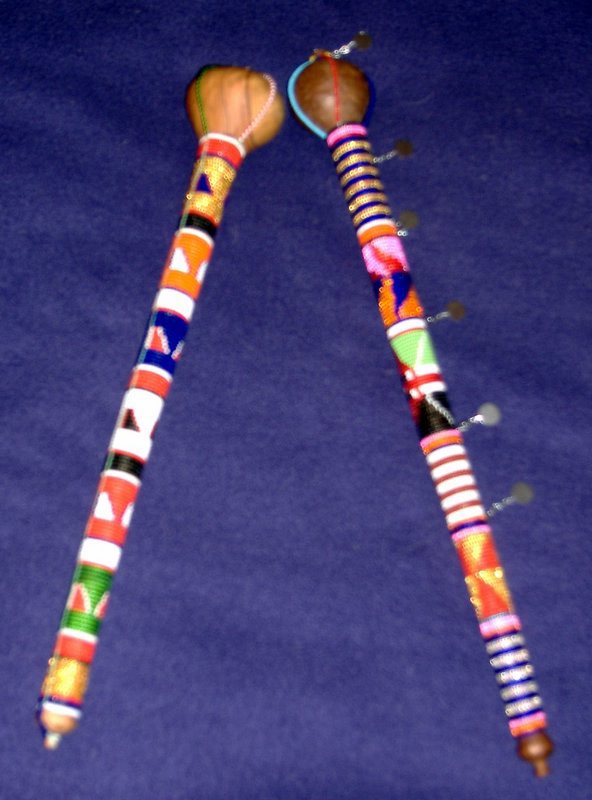
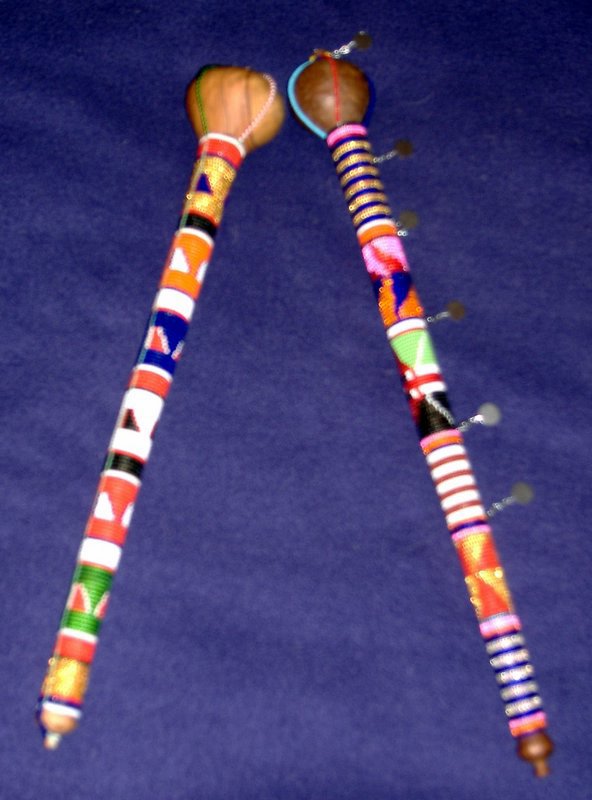
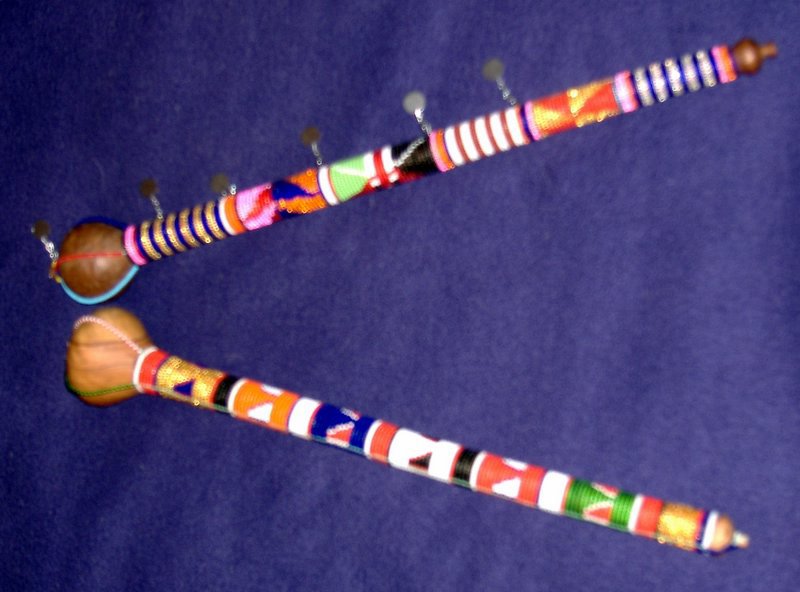
At the end of the worship, they presented gifts to all of us present. Since I was the one who preached, among the gifts, I was given a Rungu. It is a club with a large head on it that was originally used for hitting and defense. It later came to symbolize a Masai chief or elder and finally a Masai leader. Ask to see it if you are in my office. It will be on display. After all not many white men ever get to be Masai chieftains!! 
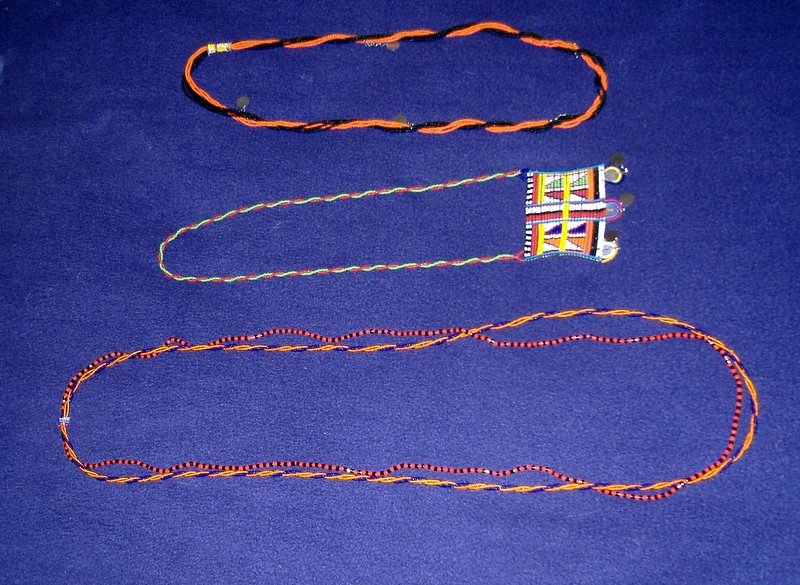
A very touching moment occurred with us barely noticing it. One of the women came forward and spoke softly to the Pastor during the final singing. After a moment he nodded “yes.” What we later realized was that she had gone around after getting the Pastor’s permission and collected necklaces from the women. At the presentation, they came forward and put the very necklaces they were wearing around our neck. That was a very moving experience.
They also had prepared personalized Masai bracelets for every member of our team in Kenya. To really get the picture here, you need to visualize the bracelets. They are leather straps with hundreds and hundred of beads strung in rows around them. Here is what is amazing – all of our bracelets had our names on them. It is hard to imagine how much time and planning went into the making of each bracelet. The exact placement of every bead had to be carefully planned.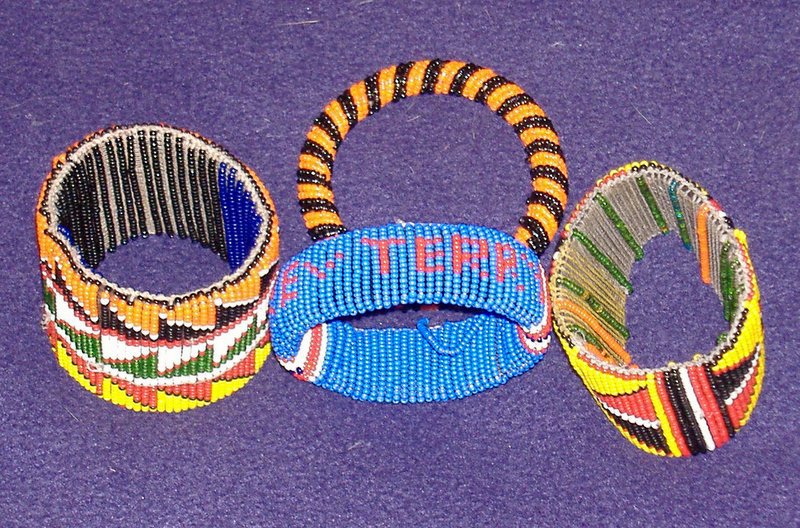
After worship we went outside and as is a custom here we are very quickly learning, had a “soda,” – Coca Cola and Fanta Orange. (Please note here, Coke not Pepsi!) We then had photo ops with the various folks. The women who made our bracelets all wanted to have their picture taken with us. I am going to mail it to them upon my return.
In the afternoon beginning around 3:00 (it took that long to get back from worship since it was not over until 2:00) we had lunch with seven pastors. It was very interesting to hear some of their stories. When we asked what their needs were, they responded two things: prayer and training. For most of them all they have is a Bible, if that. I thought about all the training we pass up in the states as Pastors while these men were begging for some.
In one very challenging event, we heard the story of one pastor who came close to being beaten for the cause of Christ. He stood up to one community leader and told them he would not permit them to force a certain young girl to marry an older man. When one of the chiefs said he would beat him, the pastor turned his back and said, “Which side do you want to start on, because I will not permit this to happen!” I could not help but think of the issues and pressures we so easily cave in on in the United States.
Wednesday, November 09, 2005
Out of Africa: Part 7 – African Worship & Community Needs
On my recent trip to Africa, I disciplined myself to keep a daily journal of what transpired and how I felt about it. These entries are from that journal.
Sunday, October 23, 2005
Experience #1 - Worship in Africa
This was a busy and very intense day, so to keep this entry from being too long, I will break it into several entries. We began the mid point of this journey as every day with a communal breakfast. After breakfast we departed for two separate churches for worship. Joshua and I would worship at a Masai congregation while Gary would go with John (World Vision US rep) and his 20 year old son Taylor to worship at a Kisipigi congregation.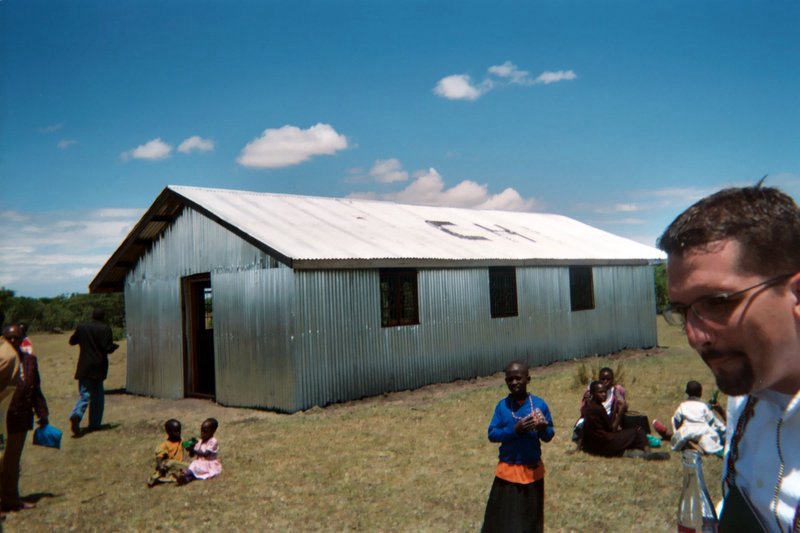
We arrived at our gathering shortly after 10:00 am. Folks were already inside singing. One of the leaders of the church told me that the folks would be slow arriving because the Masai have work they must do with their cows before they can come to worship. Folks continued to arrive for the next hour.
We later learned that this was a combined worship of four churches gathering together. It was not until 11:15 that everyone, including the primary pastor arrived. Worship then went on for another two hours. It included more singing, testimonies, two primary sermons, and 3-4 mini ones.
There were some similarities in their worship to our own, but it was not a 100% cross over. Their singing is in responsive chanting using only a single drum. The women are the primary leaders since in this culture the women will sing to the men anyway. However, one visiting Pastor did lead one song.
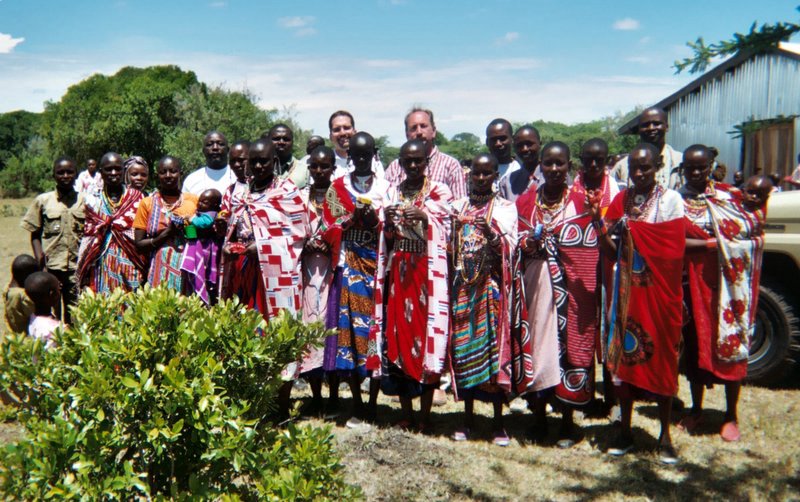
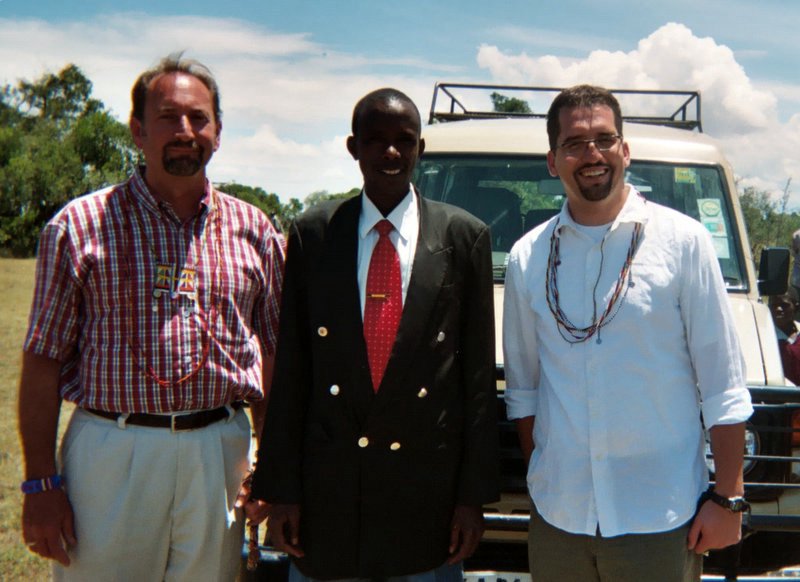
The primary pastor (red tie in the photo between Joshua and me) reminded me of my first pastoral mentor, Richard Horn. My son Richard is named for this man; that is how highly I respected him, so this is not small passing praise I am offering up here. He walked like him, carried himself like him, preached like him and even moved among the community folks with the respect that I have never seen in any man except Richard Horn.
This pastor and I both gave the two primary sermons in the worship. What a great treat! I shared with them the story that crept into my conscious during the worship. When I was still in seminary, I heard a missionary speak who worked with the Masai. He showed some photos of the Masai, and asked us to pray for them. I recalled praying for the Masai, never in a million years imagining that I would be worshipping with them and preaching in their congregation some thirty years later.
During the introduction they apologized for the worship being in their language and not in English. When I arose, I said it was we who should apologize for not knowing their language, not the other way around. Prior to rising, I asked one of our interpreters how to say, “Praise God,” in Masai. It is “Meisisi Yesu,” which is literally “Praise Jesus.” I wanted to show respect for their language so at the end of the message I said “Meisisi Yesu!” The look of delight and joy on their faces told me that I had indeed done the right thing.
Their method of taking up an offering was unique. They put three large bowls on a bench in front. Each was a different color. The pastor said that one was regular offerings, the other was tithes, and the other was fo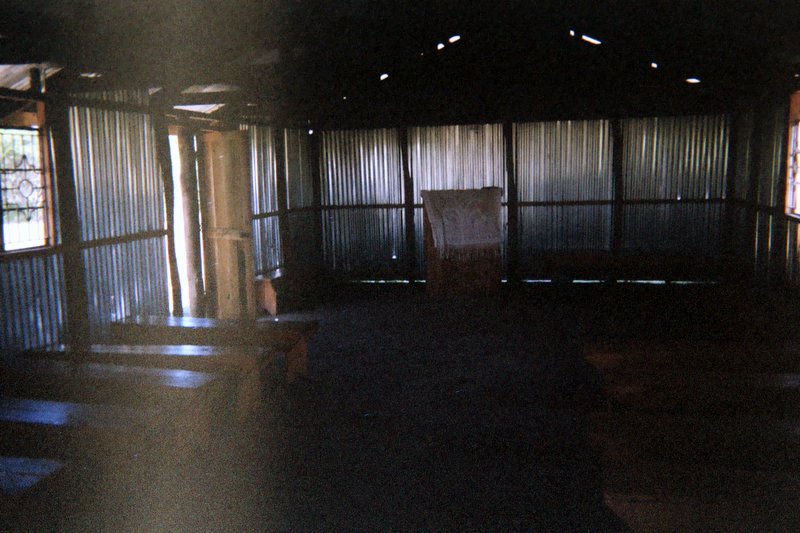 r special offerings. I am not sure of the distinction between them, but the Masai clearly knew what was taking place. Then they sang while folks filed forward putting in their offering of Kenyan Shillings. I put in some shillings myself. But what was most moving, one woman carried forward a bag of seeds she had brought to worship. As she laid them on the bench, I prayed for her. I have no idea who she is, and will probably never meet her again until I get to heaven, but I have prayed for her numerous times since that day.
Tuesday, November 08, 2005
Out of Africa: Part 6 (Continued) – First Community Visits
On my recent trip to Africa, I disciplined myself to keep a daily journal of what transpired and how I felt about it. These entries are from that journal.
Saturday, October 22, 2005
Experience #2 - A Schoolyard Celebration
After lunch we visited the Engudi School for Masai children. We all felt the opening welcome when we arrived yesterday was incredible. And it was. But we had not seen anything yet. We learned full well the Africans have a great love for ceremony. We knew we were heading to a school and they were expecting us. But we had no idea of what was about to transpire.
After driving down a slight grade toward the school area, we crossed an open field to the “gate” entrance to the school. There in front of us were several hundred children in full Masai dress and lined in a military precision. As we exited our vehicle, they came toward us dancing, singing, smiling and looking for us to touch their head and bless them. Girls who had been selected approached us and presented us a “stick.” (Actually a small branch of a tree that was stripped and clean. It is what the Masai use to shepherd the cattle.) They then took our hands, one girl on each hand, to lead us to the area where the p rogram would be about 100 yards away. We were seated in seats of honor in preparation for the program that had been prepared. As we walked I could not help but notice that the girls would lightly rub or touch the top of my hand. I was reminded that I had been told that I was the first white man many of them had ever seen, and they were feeling my skin to see that it felt the same as theirs. Tell me that does not give you the chills!
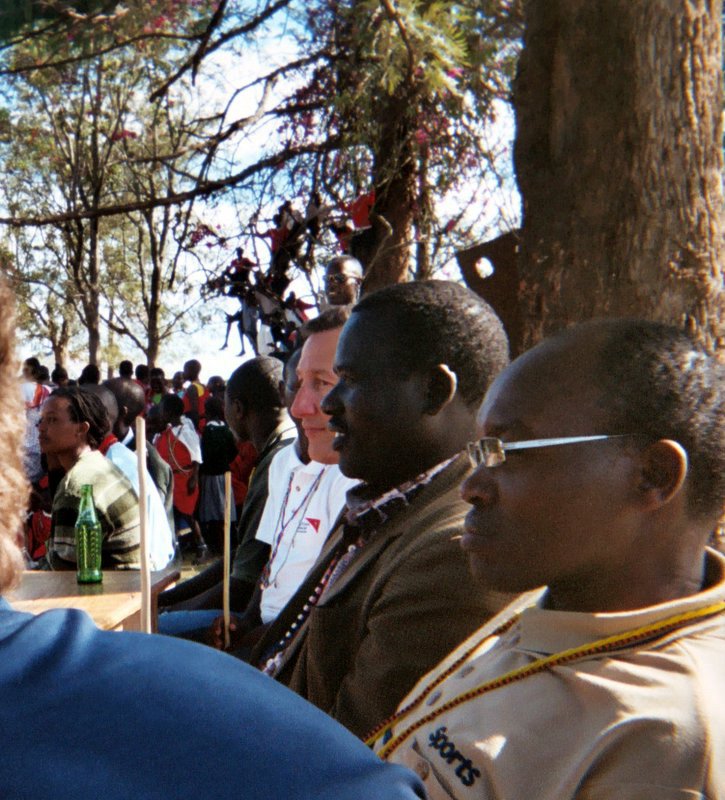
We were given Coca Cola or Fanta Orange and greeted very warmly by the dignitaries present. There was an elder, a former chief, a government official, numerous school officials and probably more than a hundred parents. Folks were literally climbing up in the trees to get a full view of the day’s events. It was apparent they had been preparing for this day a very long time and it was one of the biggest events to occur in this community for a very long time.
We had numerous dances and songs by the children of all ages. The women performed a song for us. We even got to see some of the legendary Masai jumping ability! There were speeches, presentations, and gifts, and an opportunity for each of us to address the crowd. I was more in awe than I think I have been at any time in my life. Actually, there may have been times that rival this one, but there were not many!
Following the program we visited the classrooms of the school, mingled with the folks and had some photo opportunities with the children. Here are some facts about the school itself.
* Started 1950
* The Headmaster was a former student here.
* Current enrollment 290 Boys, 160 Girls (shows the need to empower women and to keep girls in school and out of early arranged marriages.) The gender ratio is about equal until grade four or five.
* Eight classrooms, two are permanent
* Six teachers (Do the math here. There should be a student: teacher ratio of 40:1 at most. It is 90:1!)
* They use water from Mara River, sometimes water is contaminated by sewage dumped upstream.
* School has only three (3) toilets (one for boys, girls, and staff)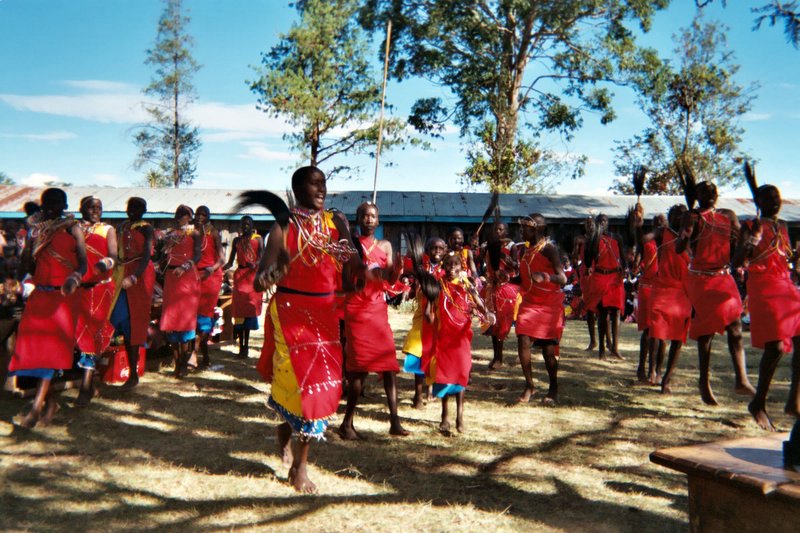
We were at the location a couple hours. After greetings and photos, we got in the vehicle to drive back. By then we were hungry and our host had prepared some sandwiches for the long rough drive back. One of the members in our group picked up a parasite probably from not using a hand disinfectant after shaking so many hands. In my vehicle I had brought it we did use it and I was able to explain to our African hosts why we did. We explained that our bodies all build up immunity to the bacteria we are in contact with regularly. Our bodies are not used to the bacteria in their culture and it would make us very ill, as happened to Taylor. We also told them that if they were to come to America, they would probably have a similar issue in our culture. We wanted to be sure they fully understood that we did not look down on them in the least. It was simply a matter of immunities.
The vehicle carrying our African hosts took off and drove like crazy to get home well ahead of us. This is no small feat considering the terrain. When we finally got back we realized why. They had rushed back to prepare us tea and cookies and a time to relax before dinner. The hospitality is legendary here, and we were experiencing it first hand.
As I debriefed the day’s events with Gary, Joshua, John, Taylor and our hosts, I was once again very humbled by the incredible experiences of this most significant day in my life.
Out of Africa: Part 6 – First Community Visits
On my recent trip to Africa, I disciplined myself to keep a daily journal of what transpired and how I felt about it. These entries are from that journal.
Saturday, October 22, 2005
Experience #1 - The Hidden Affects of HIV
After breakfast this morning we all piled into the Toyota four wheel drive vehicles and drove to spend the morning visiting four family units. We learned later in the day, that our presence could go a long way toward validating their work among the people and making things a bit smoother as this ADP (Area Development Project) moves to the second phase in this area. The roads in many places were almost non-existent. It was the roughest terrain you can imagine to drive a vehicle on. Because it rained the night before it was even worse. Our four wheel drive vehicles became stuck three or four times and took much effort to get them out or not turn them completely on their side due to the grade of the hill we were riding on.
All of the family units we visited are in the Kipsigi tribe. The Kipsigi are farmers unlike the Masai who are herdsmen. This means that they own and inherit land where in the Masai the land is communal. It is not owned by any individual. I learned very soon that there are good and bad things in this. The Biblical comparisons are uncanny. Only Kipsigi males can inherit land and they must be 18 to do so. As you continue to read notice how that comes into play in negative ways.
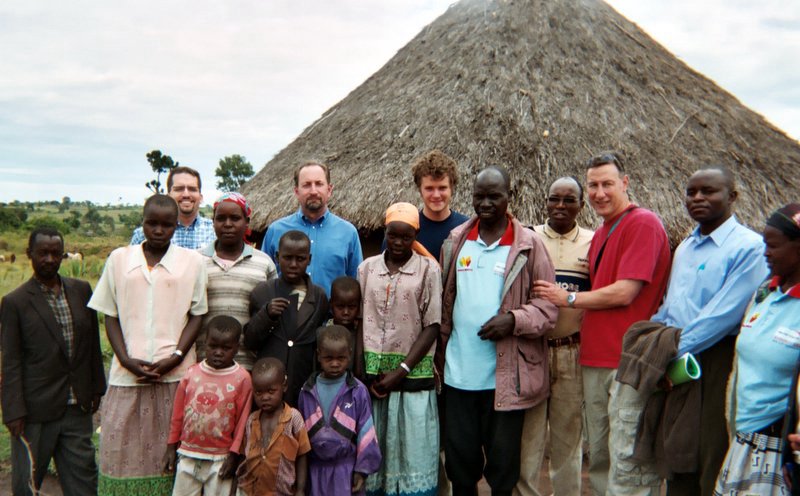
The first person we visited was Jonah. (Pictured in center fifth from the right.) Numerous folks here have a Biblical name in addition to their African name that we would have a hard time 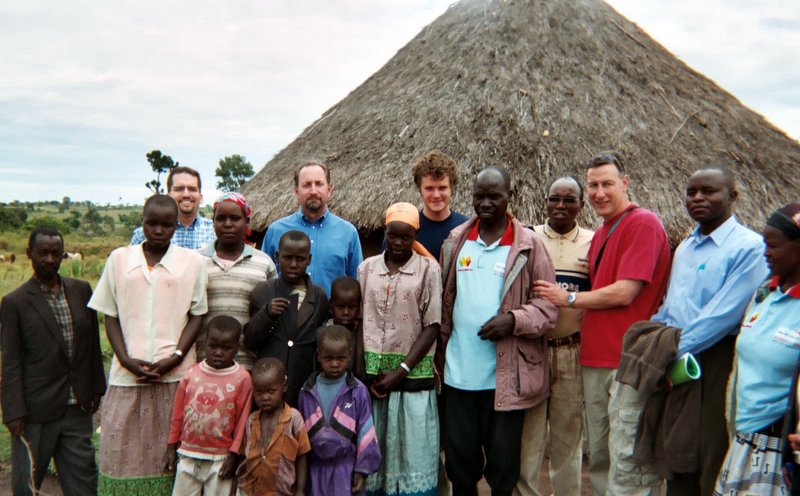 pronouncing! Jonah had two wives, both of whom died of AIDS-related illness. He is left with 14 children and grandchildren to care for. He is living positively (one of only 5 out of 50,000 in the entire ADP area who is doing so.) Currently he is only occasionally sick with minor infections. One goal is to remain healthy and live long enough for one of his male children to reach an age they can inherit what he has so no other family member could come and take it.
We walked into his round hut, which has a grass roof, mud walls, and dirt floor. It actually is a pretty cool piece of construction. It was full of the smell of smoke due to the fire inside it. It has one larger room that I estimate to be about 15 feet by ten feet. There was another room off to the side that was about ¼ that size. The opposite wall had one window. Imagine 15 people living in this space, while we complain we are cramped in our “small houses” with no storage. But I digress . . .
The second family was headed by Phillip Nyatich (22). He lives with his two brothers Jackson (16) and Kosmas (14). Their parents died of AIDS related illnesses about five years previously. Phillip is sole breadwinner; works when he can find it for 50-70 Ksh (Kenyan Shillings) per day (70 Ksh = $1). He often can't find work. It is likewise difficult to find or buy seed and plowing money. When he gets seed he often cannot cultivate his land. He has to rent a plow . . . you get the picture. They have no money, to pay for education. Primary school is free, secondary school must be paid for.(And we take for granted our education in the United States!! But again, I digress . . .) Phillip qualified for secondary school before his parents died but was unable to attend due to financial concerns.
When we asked Phillip his dreams he said, it was for his brothers to go to secondary school, study, get good jobs, and to have capital for livestock trading, and planting on his 2 acres.
Family number three was headed by Wesley (18). He lives with wife (16), younger sister (grade 5), brother (grade 3) and grandmother. His mother never married and later died of AIDS related illnesses, so when grandmother dies the land will pass to her son bypassing Wesley. They are for all practical purposes homeless. He works at a local mill for 30 Ksh/day. Everyone besides him and his wife must search for a place to sleep every night. He married early to find help in taking care of the family.
We asked him what we could pray for. He said that he will somehow be able to find land to care for his family. Remember, he is eighteen years old!!
The saddest story of all was our fourth visit. This young man was also named Wesley. He is 17. The entire community believes his father wa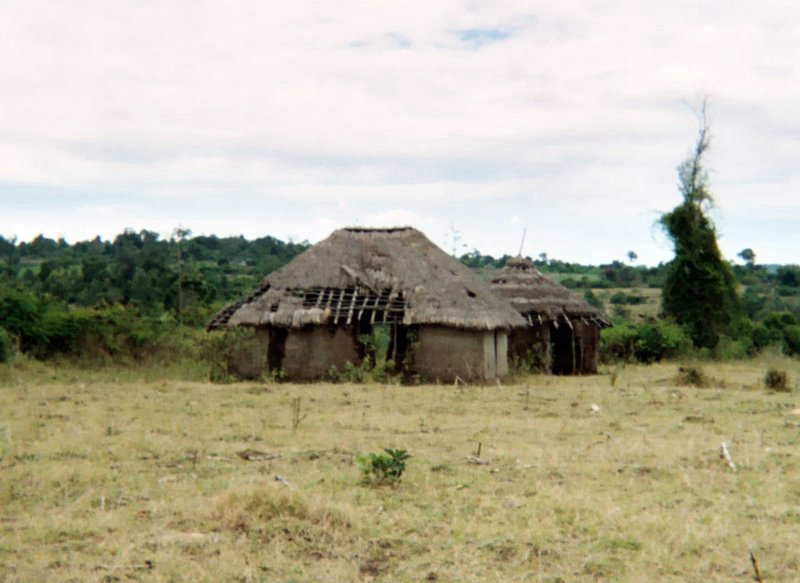 s the local source of HIV. They in turn blame him and his family for the sickness. They were, relatively speaking, wealthy. The two huts on the land are in disrepair because Wesley was forced to run away the stigma is so great. He had 2 younger sisters and a younger brother. They were taken in by far-away relatives and he has not seen them in many years. The next door relatives refuse to help him because of the stigma.
He lives with his uncle in a hotel that was once his father's and should belong to him. Do not even let your mind think of hotel the way we envision it here in the states. The rooms are about 6x8 with nothing but a wooden stick bed and a dirt floor. The uncle would owe him rent for the hotel so he trades the rent to be able to eat at the hotel. The primary use of a hotel in Kenya is to eat not stay overnight.
Simon Ole Masi said he has never seen anything exactly like this. A family is pretty well off but so shunned, they cannot even make use of what they have. For him to say this is a powerful statement since he has seen the devastating effects of the HIV stigma many times.
Fortunately the local headmaster at his school is understanding of his situation and has waived his secondary school fees up to this point. Wesley wants to become a doctor and work on a cure for AIDS. His best subject is biology – fits doesn’t it? - (normally scores around 700/1100). He stands to inherit the land that formerly was his father’s, but cannot if the uncle takes it. This very well may happen since Wesley is about to turn 18 and the uncle may see this as the time to move and take possession before Wesley is of age. Since the stigma and shunning is so strongly directed at this family the community would do little to make the uncle feel he is doing anything wrong.
Saturday, November 05, 2005
Out of Africa - Meeting the Community Photos
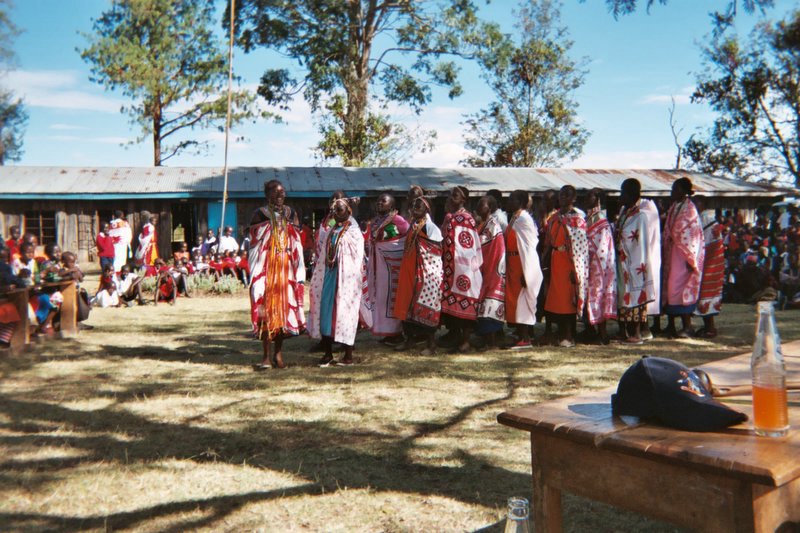
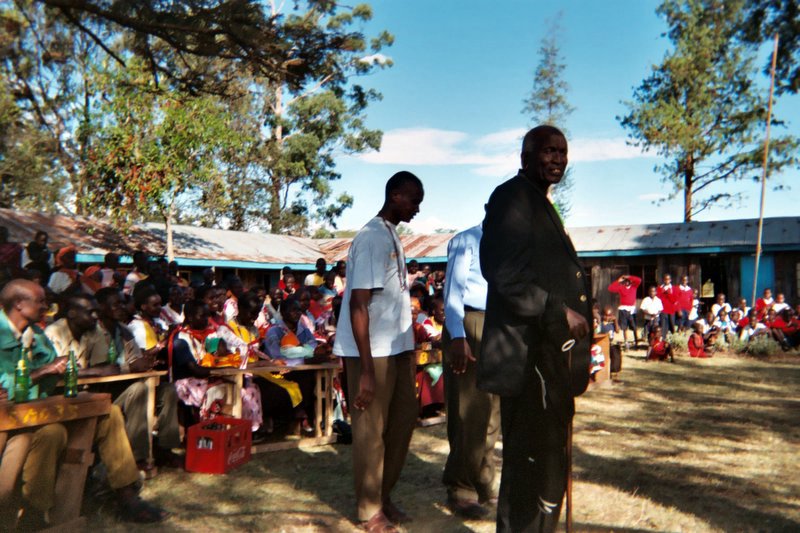 Photos here include an elder in the community addressing the crowd of over 300 assembled to meet us at the school and the teens and women dancing in the native attire. You can see the presidential representative sitting with us. He is the second from the right. The man with glasses is Simon Ole Masi whom I have been writing so much about. Above him look in the trees at folks climbing so they can see! The last photo is of the Kisipgi man we visited. He is HIV positive and is one of only 5 folks in the 50,000 in the area who are living positively and publicly with HIV. He lives in the hut behind with his 14 children and grandchildren hoping to live long enough so one of the males will be 18 years of age so they can to inherit his land.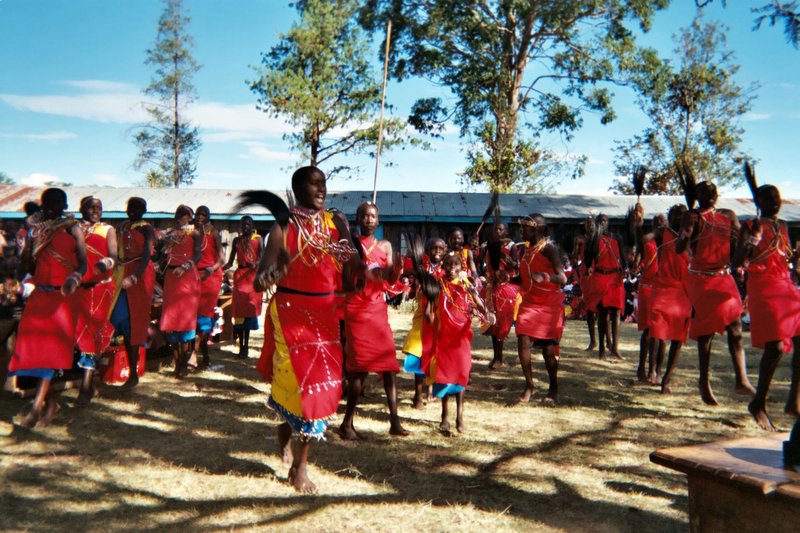

Out of Africa - Travel to Masai Photos
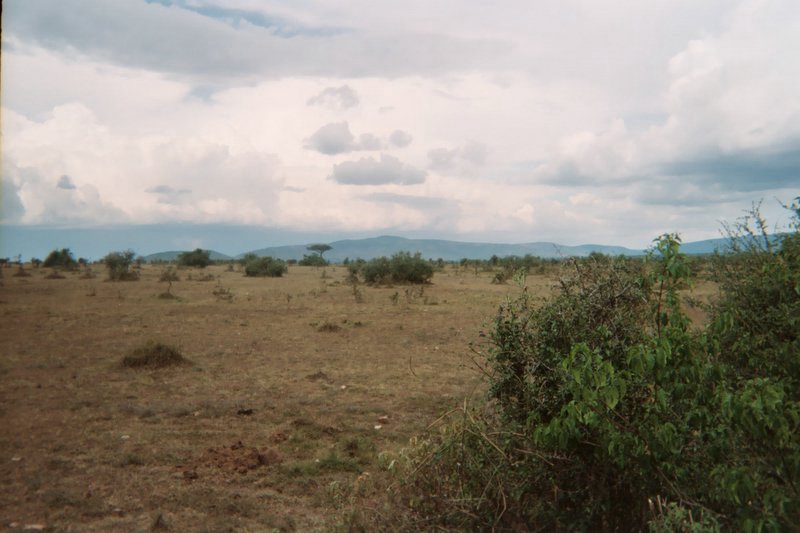 We leave orientation and travel to our Area Development Project. This shows our first view of the Masai people, the Masai Mara from the mountains, and road kill of a variety that is never seen in Western Pennsylvania!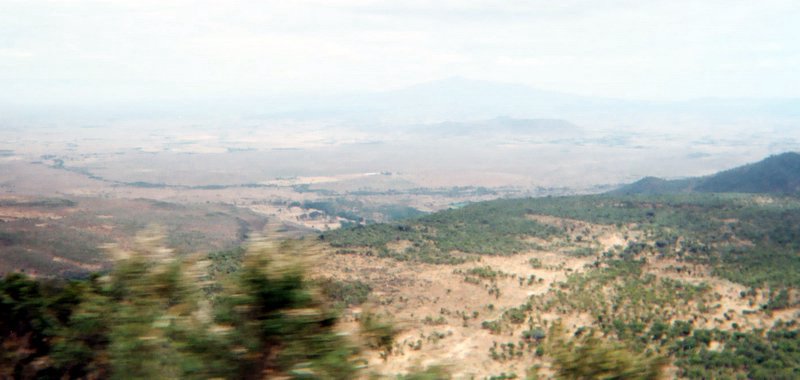
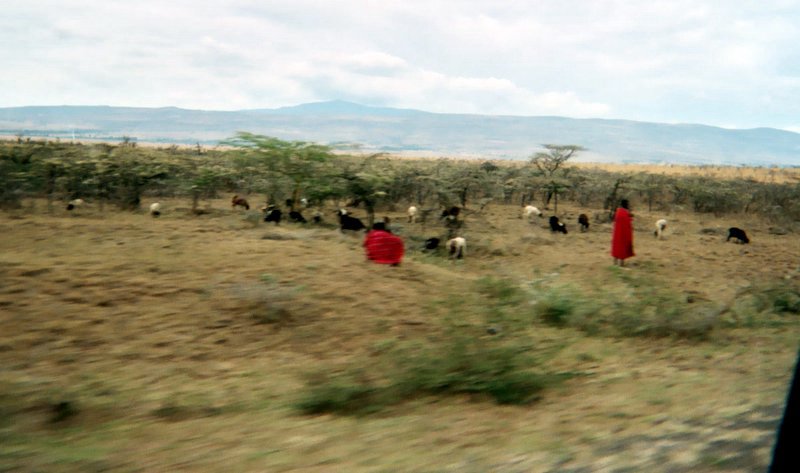



Out of Africa - Sunday Worship Photos
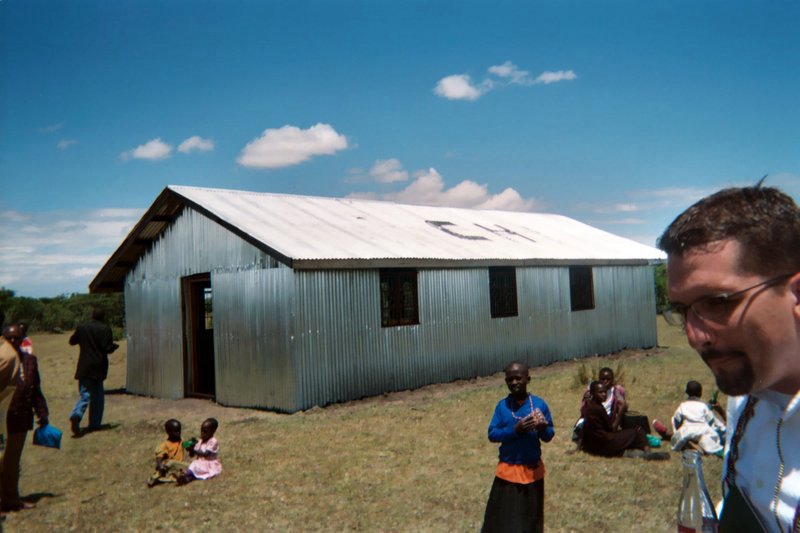
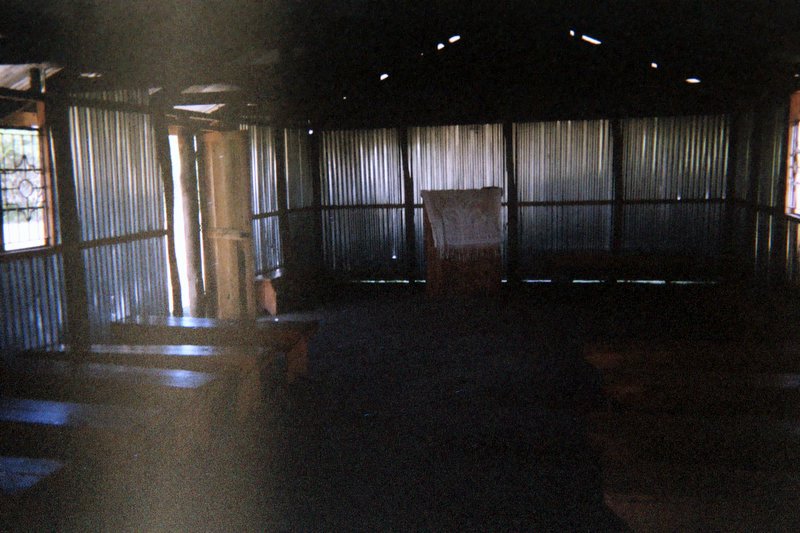
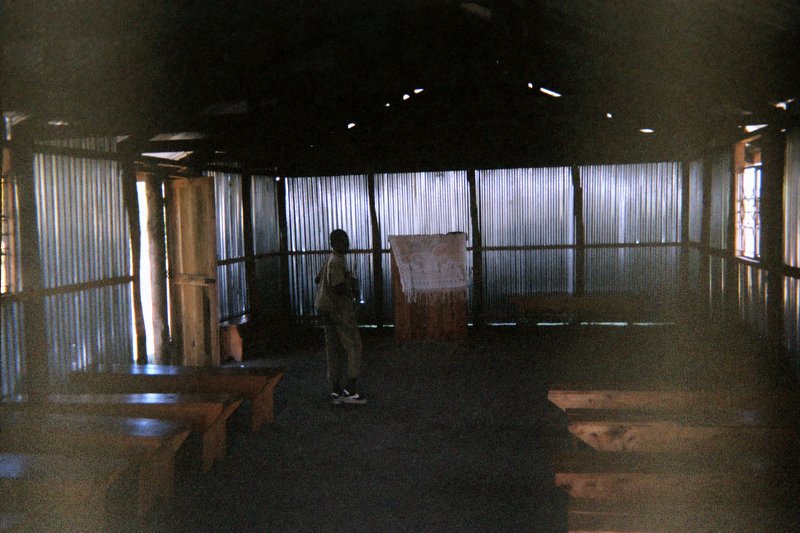
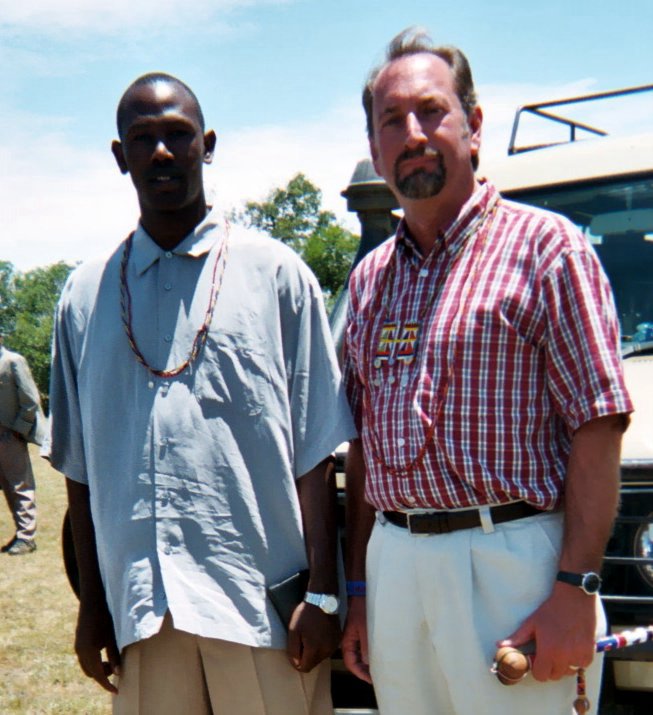 Here you see various photos of Sunday worship. They are the Worship Leader (blue shirt) pastor (red tie) ladies who made our bracelets and necklaces and a couple photos of the meeting location.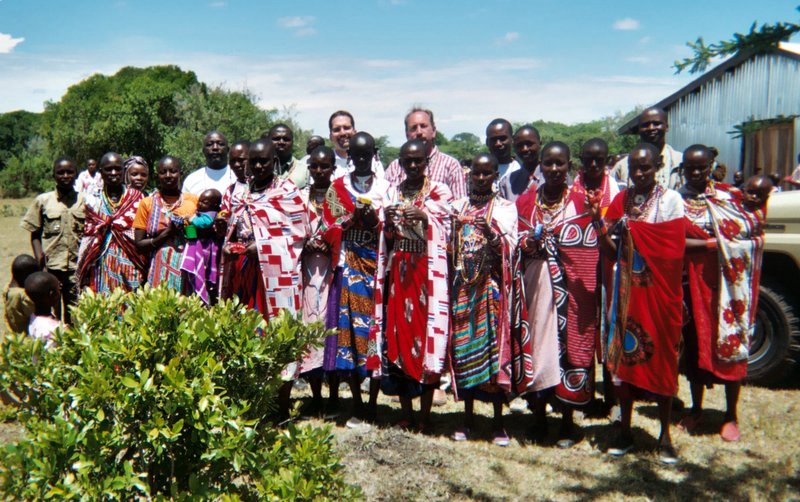

Out of Africa - Orientation Photos
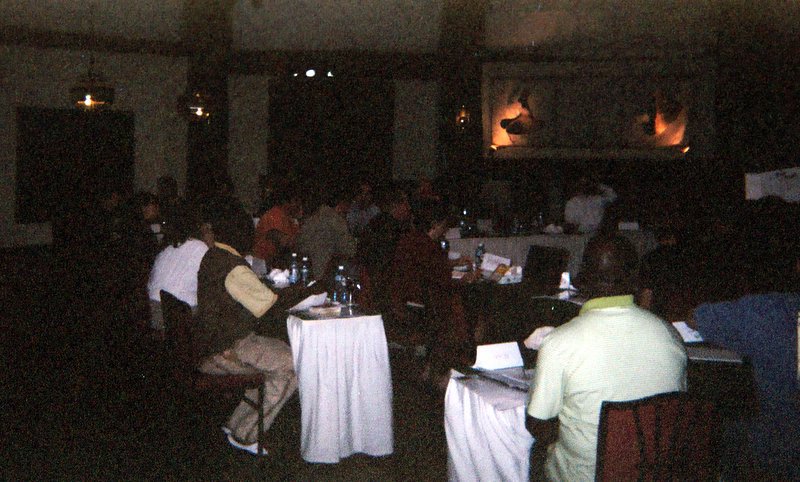
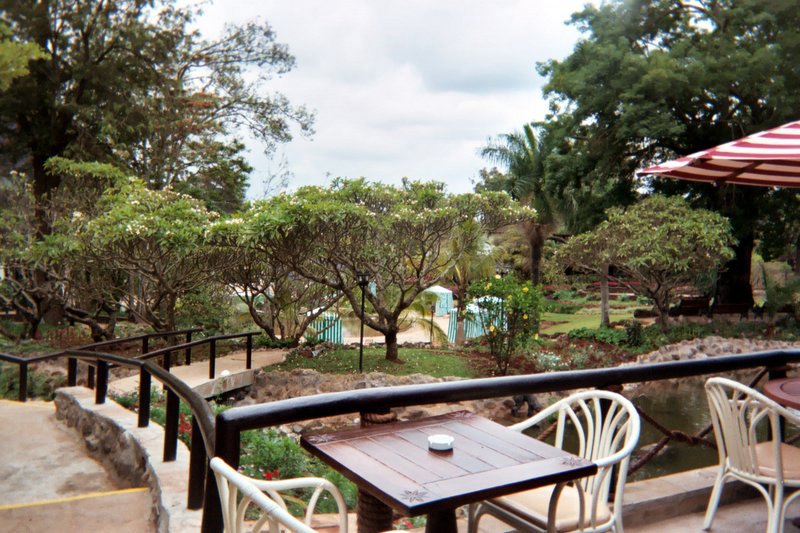 Images of the Safari Park Hotel and our training session. This hotel is top notch by African standards.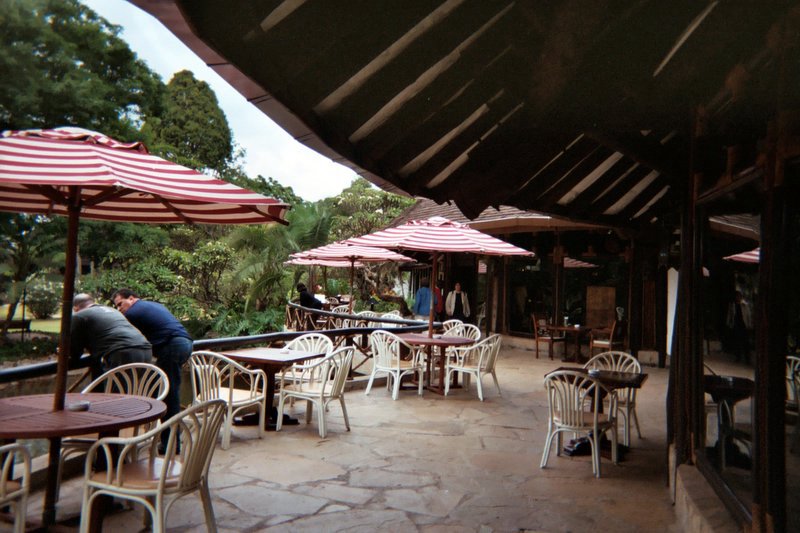


Thursday, November 03, 2005
Out of Africa: Part 5 – Arrival with the Masai
On my recent trip to Africa, I disciplined myself to keep a daily journal of what transpired and how I felt about it. These entries are from that journal.
Friday, October 21, 2005
After driving over 300 kilometers in sub-Sahara Africa in a four wheel drive you have a new appreciation for the roads in the United States, no matter how bad they are. We drove for over two hours of this seven hour journey over roads where there were no roads. We drove where the safari vacationers were, only we kept going. There is something very unique about riding down the road, paved and unpaved, with zebra, wildebeest, giraffe, warthogs walking beside the road with the sheep and the cattle. The funniest part of the journey, was to see road kill beside the road, much as in the states, except the animal killed was a zebra!
That was the easy part of the journey. I had no intestinal issues, and no near death experiences, but I did have a near life experience once I arrived. It impacted me tremendously. Here are some details of that experience.
We came down the dirt “road” to where the Area Development Program was located and saw something that I will never forget as long as I am allowed to breathe air. There, lining the road waiting for us, (we were 90 minutes late!!) were several hundred Masai Tribesmen. There were men, women, children, boys and girls. Lining the road, dressed in their best colorful attire (matching for the children) singing to us and swaying as we drove past. They were waving to us and acting like we were visiting dignitaries! They followed the cars in on foot, and when we stepped out, the children came upon us singing and one after the other asking to be blessed. We were then told by World Vision’s Project Manager (an amazing African man – that in itself would be another blog) that they would like us to make our way to the stage for a short program.
We went to the stage area and were given the seats of honor. There small children continued to come up to us to place our hands on their heads to bless them. Some of these kids were the age of my grandson Gavin. I wanted to cry but that is the ultimate sign of weakness among the Masai. Also, it is hard to shed tears when they seemed so joyful. These precious human beings felt better because I touched them! There is something incredibly humbling about that experience.
It began to rain so we suggested turning the stage so almost everyone could get under shelter. They were going to do this entire program standing in the rain while we sat in the dry if we had not made this suggestion. The Manager gave the layout of the program (aided by an interpreter) with us as the guest of honor and opening prayer. He once again welcomed the visiting guests from America and they began the program.
The smallest children gathered in front and sang praises to God in the Masai tongue. Simon leaned up to me from behind and translated the words they were repeating as they sang and danced. It was then he told me that this was the first time many of these children had ever seen a white man in their life! Next the older children sang songs similar but more mature, also about praise to God.
Finally the women came forward and sang to us. I was reminded that the night before Simon told us the women sang to the men. As they sang, one of them came to each of us and presented us with a bracelet. My hand was too large for it, but oh how I wanted to force that bracelet on! Tears wanted to come once again, although I choked them back.
Finally the women did a skit, as the entire group laughed. The skit was about a woman in labor, with the purpose to show us they needed a maternity clinic here. Women die often in childbirth, or it was very difficult and the travel out for assistance was all but impossible. I was reminded again of one of World Vision’s primary objectives to assist in the HIV fight was the empowerment of women in the communities as the cultures could adapt and accept. This one already saw the need on some level.
A political representative of the President came forward to extend his welcome and greeting. Along with one of the World Vision personnel from Africa who reminded everyone, what they knew, but we did not, that because it was raining was a good thing. Rain here is a sign of blessing, and this showed God was going to bless our next four days among the Masai.
Afterwards, each of us was invited, to give a greeting which was translated for the entire community. The ceremony closed in prayer and we were escorted to the guest quarters, where I now sit. There is no doubt in my mind, that this is the nicest place to stay for 50 square miles aside from expensive Safari hotel locations. The people we are here to meet live in huts, I had a room in a building.
Once in the house, they served us coffee and cookies as we sat and talked about their plans for us for the next four days. They have been planning and preparing for our visit for MONTHS I was told.
We conversed about what the community both wants and needs and their plan with World Vision to bring that about and release total control of everything to the local people by sometime around the year 2018.
We were given 30 minutes to rest before they gave us our dinner. It was served buffet style and included soup, salad, vegetables, mutton, goat and fresh fruit.
I now sit in this room writing and asking the same question I asked on opening night, “God what are you up to?”
Check back, photos will be added later today.
Wednesday, November 02, 2005
Out of Africa: Part 4 – Learning how to Change the World
 On my recent trip to Africa, I disciplined myself to keep a daily journal of what transpired and how I felt about it. These entries are from that journal.
Thursday, October 20, 2005
I learned a lot about World Vision today. They have been around over 50 years doing relief work and holistic ministry among the poor. Presently they are serving in 100 nations. They are definitely not an American ministry. They employ 13,000 world wide. Only 800 are in the United States. That is less than 5%. They pay a good wage to get good people and therefore many other ministries are envious of them. But the respect they have in communities from the people is pretty impressive.
To get an understanding of what takes place, I jotted down these key elements of holistic ministry as seen through World Vision.
1. Transformational Development - this includes:
*The well being of children and families
*Empower children as agents of change
*Transform relationships
*Interdependent and empowered communities
2. Transition systems and structures
3. Emergency Relief
4. Promotion of Justice
5. Public Awareness
6. Witness for Jesus Christ by life, deed, and word to encourage people to respond to the gospel.
7. Respect dignity of life
The goals are long range:
* Assess needs with the community
* Design a plan based upon research
* Implement the plan (3-12 years)
* Monitor and Evaluate
* Reflect and learn from the process
* Transition total control to the community (12-15 years)
Some key elements of this Church to Community sponsorship program.
1. Child sponsorship dollars go to the community – thus assisting the child you are sponsoring and the entire community.
2. Each community decides their own priorities. World Vision does not dictate to them.
3. HIV education, prevention and assistance is interrelated in all aspects of their ministry.
4. The model of church engagement is church to community not church to church.
5. African staff and communities make the decisions not Americans.
Here are some startling statistics they shared with us that are pretty eye opening.
Every 1.2 seconds a child is born into poverty
Every second a child is infected with HIV
Every 2.1 seconds a person becomes a refugee
Every 3.6 seconds a person dies from malnutrition
The afternoon was set up for a time to visit a giraffe park and the Karen Blixen estate. (The movie Out of Africa is set there.) I was told by some folks that it is not really that great, so I skipped out on that trip to catch up some reading, journaling, and a nap!
This final night in the Orientation phase, we sat with our teams for dinner. Our team will be led by Simon Ole Masi. It means “Simon son of Masai.” He is a Masai elder himself, so this makes for great ministry. He is very excited that we will be among his people. The more I talk to him, the more impressed I am with him.
There are three pastors visiting this Area Development Project. Joshua is a Church of God Anderson, Indiana pastor serving outside of Indianapolis. Gary is a Grace Chapel Pastor from Fort Lauderdale, Florida and of course me. I cannot say for sure, but I think we are going to hit it off.
We will meet two primary tribal groups the Masai and the Kipsigi. The Masai are warriors and herdsmen who do not own land. The land is for the community. They all share grazing on it. The Kipsigi are farmers so they own land. They used to be at war, but now are in a time of peace. There is an excitement building and there is likewise a bit of fear developing. Gary told us he has never been on a Mission trip where he did not get gravely ill from the food, climate, etc. But he is here because God told him, through his wife to come. When I heard that, I compared my situation. My family is not why I am here, but I have to give them credit because they did not get in my way or make it difficult so I would be distracted while here. That would surely have limited God’s working.
We depart tomorrow morning just after breakfast. We will have a six hour ride in four wheel vehicles that will cover about 350 kilometers. The first 120 are decent roads we are told. When we asked him about the others, Ole Masi just laughed.
On a side note, I will have some photos up tomorrow.
Tuesday, November 01, 2005
Out of Africa: Part 3 – When Orientation is Dis-Orienting
On my recent trip to Africa, I disciplined myself to keep a daily journal of what transpired and how I felt about it. These entries are from that journal.
Wednesday, October 19, 2005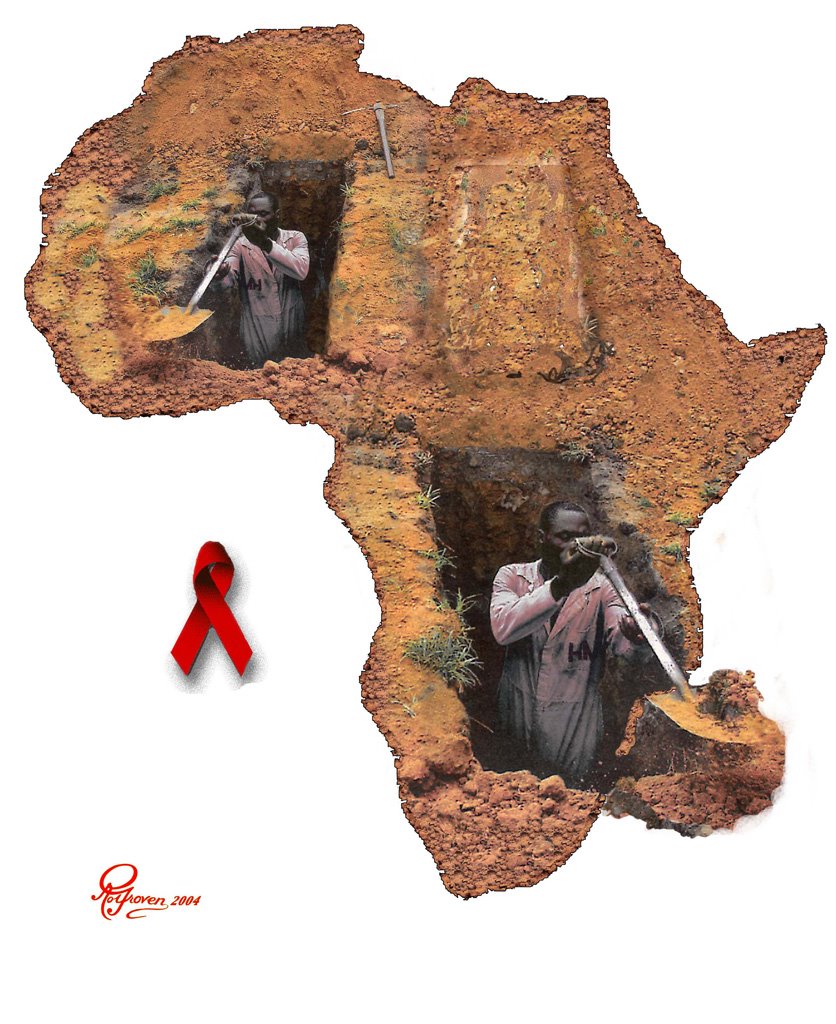 The day’s orientation, lasting from 8:00 am until 1:00 pm was spent in HIV and AIDS training. The training was led by a man and woman from South Africa. Ernest, the African is one of the top African officials in World Vision. The primary “trainer” regarding HIV was Logy (pronounced Low-ge with a hard “g”). She was a former social worker who now works with World Vision in the HIV battle. Her father named her while studying Greek. Her full name is Eulogia which is Greek for “Blessing.”
As we talked about HIV the stats basically were nothing new. In truth, the statistics was one of the primary items God had used to prime my heart for this trip in the first place. It was interesting to learn that India is overtaking Africa in new infections and that the Eastern European block of the former Soviet Union has the highest percentage of new infections per capita.
The knowledge about how the disease spreads was basically already in my knowledge bank as well. There were facts of which I was made more keenly aware. For example, the method of mothers transferring the disease to the child was made clearer. It is through the blood that is involved in childbirth and through nursing, but not through the pregnancy period since there is no exchange of bodily fluids during pregnancy.
The bodily fluids that carry the highest concentration of the HIV virus are semen, vaginal fluids, blood and mother’s milk. These fluids make the risk of infection especially high. Saliva, tears, urine have a much lower concentration and the risk of infection is likewise very low.
I learned a bit more about how the virus operates. One of the facts that make the HIV virus so dangerous is that it, not unlike the flu virus or the cold virus, mutates regularly. This makes it much more difficult to attack because there are so many strains. This fact alone means that if a couple were married who both were HIV positive, they should not have unprotected sex because they could be carrying different strains of the virus and then both compromise their immune system further by running the risk of double infection.
HIV (Human Immunodeficiency Virus) is so dangerous because of the method it attacks the body. HIV, as the name suggests attacks the body’s immune system. It is a very insidious virus. The HIV virus attaches itself to the body’s T-cells. The T-cells are the “generals” as it were who direct the immune system to attack any invader. This virus causes the T-cells to not alert the body’s natural defense mechanism. In time the T-cells will actually reduce in number. It is then that the person is diagnosed with AIDS. A healthy body will have a T-cell count of 800-1200. Once it drops below 250, the person is said to have AIDS. In reality the only thing that has changed is that the body has a lower count of protecting T-cells due to any number of reasons.
In reality, no one dies from AIDS. They are said to die of AIDS related illnesses. Opportunistic viruses, such as flu or pneumonia, etc. can have a more deadly affect, and cause de ath, because the body’s natural defense is shut off.
This is distinct from another attacker of the human body . . . cancer. Cancer cells are the body’s own cells. They are renegade cells that are attacking the body rather than promoting health. Since they are the body’s own cells, albeit renegade, the body will not attack them, and they cause all manner of illness and death. Both illnesses prevent the body from defending itself, but by very different means.
So much for my medical expertise. (My doctorate was not in medicine, so if I have some errors, please excuse me.) Even this is just the tip of the ice berg of what these hours were like.
There were items I would change in the training, but all in all, it was a worthwhile time. In the developing world of Africa, the empowerment of women is seen as a key component in the battle against HIV and AIDS. Women have little if any rights in most of the countries. That will come to bear in a much more real way as the week goes on and I will share some more of that.
An interesting take on this pandemic can be found in this interview with Bono in the New York Times. You may have to take two minutes to create a login account.
During the afternoon we boarded a bus and took a shopping excursion to a local shopping district. The area was close and tight like I have seen in the Middle East, and there was likewise a lot of pulling you toward their booth in that vein. I have to admit I was not overly excited because I, like most men, do not like shopping. I wanted to get gifts for the significant people in my life, and for the folks who sponsored me to come here, that alone was why I was here. I was about to learn something about myself.
I have always thought I hated to haggle over prices. Our Kenyan host told us that the quoted price was always the beginning place to negotiate down. The experience actually became fun. I wanted to pick up some gifts for my family, a few friends and the folks who had given financially to make this trip possible. I began to enjoy the haggle so much that I got some good deals. Our host said not to worry, even if we had a good deal, they will not sell if they do not make some profit. That is good, because I did not want to take advantage of anyone. But perhaps I learned something about myself. I may be better in the states if I had the cash to be in a position to discuss. All I all, this was a good diversion after the morning sessions.
Monday, October 31, 2005
Out of Africa: Part 2 – Letting My Brain Catch Up
On my recent trip to Africa, I disciplined myself to keep a daily journal of what transpired and how I felt about it. These entries are from that journal.
Tuesday, October 18, 2005
For the most part I spent the day becoming acclimated to the time change. I took a 2-1/2 hour nap which is very unusual for me. I discovered a Business Center here so I was able to do some email in addition to getting to know some of the rest of the team. Most are my age or older. About 75% are pastors and 75% are male.
At the opening dinner which included 45 minutes of sharing why we were here, I had an interesting experience. As the others were sharing their reasons I wondered what I would say. After hearing a couple of personal stories from World Vision folks about how this had impacted them and others, I caught myself saying, “God, what are you up to?” When it was my turn to share I very briefly told about the miracles that took place just to get me here (and there were several), and how I tried to get out of it but God continually removed every obstacle. So my final comment was to share the above question and say, “I want the answer to that question.”
Sunday, October 30, 2005
Out of Africa: Part 1 – Leaving on a Jet Plane . . . Three of Them!
On my recent trip to Africa, I disciplined myself to keep a daily journal of what transpired and how I felt about it. These entries are from that journal.
Sunday, October 16, 2005 and Monday, October 17, 2005
Today I flew out of Pittsburgh with a certain amount of trepidation. I am sure I am doing what God wants me to do for this time, but what will He call me to do as a result when I return? The answer to that is weeks away.
The flight to Detroit out of Pittsburgh left 25 minutes late. With only little over an hour to make an international connection, I was surely wondering what was happening. The plane was overbooked by about a dozen folks so we spent time deciding who would not make the trip. I was almost one of the ones bumped, they talked to me about it, but international travelers with connections are usually not bumped I am told; so I was spared. However, I was told that returning, and they see it is the final leg of my trip, if this same thing happens my odds of being bumped are pretty high. I will cross that bridge when I come to it . . . if I come to it.
When I boarded the plane there was a brief moment of concern. My seat was assigned by the airline. This was the only seat I was not allowed to pre-assign when I booked with Orbitz. They arbitrarily gave me the first row in economy, which is the last row to board the plane. With it being so full, there was zero room for my carry on and my briefcase. They told me I would have to check it. I told them I could not. I had a short transfer to an international flight to a location that loses 20% of the bags and I had already checked one bag. I explained that this was my emergency bag. I was nice about it, and they seemed to understand. We found a seat to put it under.
Somehow we arrived on time. I assume they sped up or shortened the flight route to make up the time. When I arrived in Detroit my plane was already boarding, so I barely had time to hit the bathroom.
My flight to Amsterdam was okay. My legs are long so I usually ask for an aisle seat so I can stretch out and so I can go to the rest room without disturbing anyone. When I got to my seat, an Indian woman asked me to change with her husband so he could sit with her. He was about 25 rows up and a window. At first I declined, but it became apparent I would spend the next 9 hours listening to her complain if I refused. So I squeezed in to a window seat next to a Croatian man who spoke bad and little English, although it is much better than my Croatian! He was a nice enough guy who drank Irish Whiskey directly from a large bottle the entire flight to ease his fear of flying, and talked about how much he loved French Cognac. He offered me a drink of his whiskey every 30 minutes or so the entire trip.
The transfer in Amsterdam was okay when I finally read enough to hit the gate. I had time to get a orange juice, use the rest room and begin the slow process of boarding, and it was a slow process with excessive security measures. The flight was on KLM (Royal Dutch Airways) and I was very impressed. First, I had my aisle seat, and had the seat next to me empty. The staff seemed cheerful, acted like they enjoyed their job, and fed us mercilessly! They even gave us an ice cream break!
My arrival in Kenya Monday evening was actually pretty uneventful. It ended over 24 hours of travel. While waiting on my bag, which did indeed arrive with me, I was able to exchange American dollars for Kenyan Shillings (Ksh) the local currency. The exchange rate was 70 to 1. So I was carrying almost 20,000 Ksh in my pocket! Do not be impressed, an ice cream cost me 150 Ksh at one rest stop.
We were met by World Vision personnel who transferred us to our hotel, where we were met with African hospitality. Here they greet you with a glass of fruit juice and a hot moist wash cloth to wash your hands and face. I could get used to this. I wonder if my staff will be doing that when I return? Na-a-a-h.
My roommate was from Flushing, NY. He works for World Vision and also a ministry called Pray New York that unites NY churches in prayer. By the time we got to our room it was 11:00 pm or so. We went to bed and after about 2 hours I finally drifted to sleep inside my mosquito netting. About 4 hours later, I awakened ready to go. I disciplined myself, however, to lie in bed and pray rather than getting up and stirring around potentially disturbing my roommate.
Why did I awaken so early? Well, there are at least five reasons.
1. My biological clock is no where near on Kenyan time.
2. I am anticipating what God will do over these next two weeks.
3. I left my church knowing that I have several major staffing issues facing me. I want to do what is best for Fountain Park and the kingdom. I am sure these issues will lessen in my consciousness as the days pass; but for now they are very evident in my mind.
4. There are a lot of personal issues rolling around in my mind presently. Some of them are pretty serious decisions that I feel I am facing in the upcoming weeks and months.
5. I am concerned for Gavin as we decide how our decisions regarding his treatment will play out.
Day 1 and 2 are over. Things are just starting and already I can tell, in the words of Bob Dylan, “Things they are a changing.”
Africa - Day 14
I arrived back in the states yesterday after a hectic travel schedule. Beginning later today or early tomorrow I will be posting a daily journal I kept during this experience. It will share about the trip, its impact on me as well as my present and future considerations.
I hope my brain arrives soon since I have to preach this morning! :)
Thursday, October 27, 2005
Africa - Day 13
Friday, October 28
(For information on what this prayer guide refers to read post on Sunday, October 16)
Final travel day. Pray for safety and the acclamation to home once again. Pray for clearance in customs in Detroit and the flight to Pittsburgh late in the day.
Pray for me and Fountain Park Church as we seek to determine what exactly God wants us to do in a budding partnership with the African church. Pray for wisdom and discernment.
Wednesday, October 26, 2005
Africa - Day 12
Thursday, October 27
(For information on what this prayer guide refers to read post on Sunday, October 16)
Continued debriefing discussions then return flight to Nairobi to prepare for the long journey home. I fly out at 10:10 pm arriving in Amsterdam at 5:30 am. Friday morning. Pray for safe travel, and any contacts I make with persons in route.
Tuesday, October 25, 2005
Africa - Day 11
Wednesday, October 26
(For information on what this prayer guide refers to read post on Sunday, October 16)
Debriefing continues with the group. Pray for me as I unpack what I have experienced. I will have been among the poorest people in the world and must allow them to serve me in the midst of their life struggles. This promises to be one of the most difficult parts of the trip. The fun part will be game drives among the animals in the wild of this vast park.
Monday, October 24, 2005
Africa - Day 10
Tuesday, October 25
(For information on what this prayer guide refers to read post on Sunday, October 16)
I will travel with the reunited full group to our debrief site at the Masai Mara. This will include a six hour return van ride followed by a 45 minute flight to the site. The Masai Mara is where the most extravagant wildlife in Africa lives. We will end the day by beginning our group sharing and debriefing. I expect some intense discussions here as we unpack our visits and share in the beauty of God’s creation in a way that most never see.
Sunday, October 23, 2005
Africa - Day 9
Monday, October 24
(For information on what this prayer guide refers to read post on Sunday, October 16)
Additional project visits will continue to open my eyes and challenge my heart. This very special day I will be visiting the child and family that I will be personally sponsoring upon my return. Sponsoring a HIV/AIDS affected child is an honor. To actually meet them and their family . . . well that is something that I know will impact me greatly being the Myers Briggs “F” that I am.
Saturday, October 22, 2005
Africa - Day 8
Sunday, October 23
(For information on what this prayer guide refers to read post on Sunday, October 16)
I will worship in an African church. This promises to be a wonderful experience. Each time I have worshipped in a culture other than my own, I am impacted. Pray for that to occur once again. Worship will be followed by lunch with local pastors. We will discuss what a partnership looks like as well as what opportunities there are for growth on both sides.
Friday, October 21, 2005
Africa - Day 7
Saturday, October 22
(For information on what this prayer guide refers to read post on Sunday, October 16)
I will be visiting project communities and interacting with World Vision staff, Community leaders, and local Pastors. I will begin to observe the rate of change in ministry focused projects that seek to address the physical, spiritual and social needs of children and families. I will learn a great deal about the impact of HIV/AIDS in the lives of children, families and churches. One of the realities I am becoming more and more aware of in my maturing state, is that Jesus really did care about the social issues of his day. He fed the hungry because they were hungry. He healed the sick because they were sick. He did not do it with a hook attached to it as I was taught in my earlier evangelical days. That is another story however.
This night in Pittsburgh U2 will be playing. I gave up tickets to this concert to make this trip. It is, as you probably know, one of Bono’s heartbeats. It is rapidly becoming one of mine. As much as I love concerts, this is a bittersweet day.
Thursday, October 20, 2005
Africa - Day 6
Friday, October 21
(For information on what this prayer guide refers to read post on Sunday, October 16)
This will be another travel day for me. I will be taking a six hour van ride to Korinda where my next four days will be spent learning about this World Vision Project site. Upon arrival I will meet my local hosts and spend time with the other pastors who are making this section of the trip. Other pastors will be going to Uganda, Zimbabwe, and other countries. I was originally to be in Tanzania on this leg. It changed when the local head of World Vision said his area was not ready to host pastors. With my change to Kenya, it means God has plans for me in Kenya. Help me to learn exactly what God desires for me and Fountain Park.
Wednesday, October 19, 2005
Africa - Day 5
Thursday, October 20
(For information on what this prayer guide refers to read post on Sunday, October 16)
Pray for me as orientation concludes with a visit to the home of Karen Blixen made famous in the film Out of Africa.
Tuesday, October 18, 2005
Africa - Day 4
Wednesday, October 19
(For information on what this prayer guide refers to read post on Sunday, October 16)
Orientation begins for what will be ten of the most intense days of my life. This orientation will include education about HIV/AIDS and its impact on children, communities and churches. I will learn about the World Vision Southern Africa ministry model. I will begin cross cultural preparation for my Project visits. I will also begin to learn about how the Africa church plays into the fight against HIV/AIDS, hunger and other issues.
Pray that the pastors in attendance, me included, would drop our pretenses and just be real with one another. That is something I only have with 2-3 guys in the states, but how much it will be needed in this venue.
Monday, October 17, 2005
Africa - Day 3
Tuesday, October 18
(For information on what this prayer guide refers to read post on Sunday, October 16)
First full day in Africa. Pray for me to quickly become acclimated to the local area. Tuesday evening is a welcome dinner with other Pastors and our in country hosts. Pray for me to have an open mind and clear thoughts about what God wants me to learn from this trip.
Sunday, October 16, 2005
Africa - Day 2
Monday, October 17
(For information on what this prayer guide refers to read post on Sunday October 16)
Today I fly from Amsterdam to Nairobi, Kenya arriving @ 7:50 pm local time concluding a full 24 hours of travel.
Pray for safety during a second long flight and any further contact with passengers and airline staff to be Christ honoring.
Pray for safe travel to the Safari Park Hotel and ease of transition on my body into local time and local customs.
Africa - Day 1
Today I begin my 12 day adventure to the continent of Africa. I am visiting with World Vision to HIV/AIDS community projects to explore how and if my church should partner with the church and World Vision addressing the AIDS Pandemic. I will be traveling with about 25 other pastors form Pennsylvania, New York, New Jersey, Colorado and Florida. This is not a work trip but a vision trip. The purpose is to listen, learn, be changed, and begin the process of finding God’s leading for Fountain Park Church.
Each day there will be a prayer post here. As you think of this, please pray for me in this issue. It is one that God has laid heavily on my heart.
World Vision C2C Pastor’s Vision Trip
Church to Children, Communities and Churches
Sunday, October 16
Fly from Pittsburgh to Detroit departing @ 5:00 pm
Fly from Detroit to Amsterdam overnight flight arriving @ 9:10 am local time
Pray for safety, health during this long flight time. Also pray for any contact with other passengers and staff that it will be Christ honoring.
Monday, September 12, 2005
Special Gifts from Friends
 It is incredibly cool when a friend bails you out. That happened to me late last week.
The last couple of weeks have been pretty rough ones. That is as big of an understatement as has ever been worded. Saying the last month has been difficult for me is like the captain of the Titanic saying, “Looks like we are taking on a little water!”
In any event, a long term friend of mine in Ohio, saved my week in many respects. I “met” this friend, known here as RA over Prodigy Bulletin Boards in the infancy of the Internet for home users back in the very early 1990’s. She is an attorney who left the field out of disgust, and is likewise quite an accomplished keyboardist in her church. (Sort of blows your mind doesn’t it?) Anyway, we have had a great corresponding friendship for going on 15 years now. We have met for lunch 2-3 times and she and her husband visited my former church while in Pittsburgh a couple years ago.
Here however, is her moment of assistance. You recall my comments a while back on my grandson Gavin, and the concerns we are having with his growth patterns. If not, read them on June 22 and 23 here. As we have been praying and attempting to decide what to do, I have kept her in the loop on this decision. Last Friday, in the mail, I received from her a prayer shawl. It was personally knitted for us to use in prayer for Gavin. The card was what really hit me. It read, “I started to knit it small since Gavin is small, but decided to pray for Gavin to grow and making a small prayer shawl is like praying for rain and not taking your umbrella.”
Enough said. RA, thanks for your friendship! And I promise to never again make fun of your knitting or your cross stitch retreats!!
Thursday, August 25, 2005
Missional in the Suburbs: Part 9 – Sharing Our Faith
Having spent a great part of my Christian life in Fundamentalist and Evangelical circles I am very aware of the importance that is placed upon evangelism. (And believe me I know the distinctions and distinctives inside and out, both the good and the bad. I will write about just that sometime, but not now.) It does not take a Greek scholar (I am no scholar but I did have four years of the language) to see that “evangelism” and “evangelical” come from the same root word. That Greek word is euangelion. The word actually means “gospel” or “good news.” So in essence, being an evangelical or practicing evangelism has a lot to do with sharing the gospel of Jesus. This is probably best described in 1 Corinthians 15:1- 8 and other places in the New Testament.
In some folks mind, it appears that all that matters is the person’s soul. The material body is nothing more than an abode for a person’s immaterial soul. If that is the case, w hat happens to the body does not matter. Do we think Jesus just fed the hungry so he could feed the soul? Do we really think he did not care that they were indeed hungry? Did he heal the body of the sick just so he could heal their soul? Do we really think he did not care that they were sick? Of course he cared. When you see it that black and white the answer is clear. Jesus cared for the whole person. He was concerned with the poor and the oppressed and not simply because they had an eternal soul. He was concerned with their entire being, with their whole humanity.
The other week I received an email from a friend of mine in Ohio who shared a true experience that caricatures this in the extreme. The woman who wrote this is a Christian and is sympathetic with their belief in Jesus. But . . . well the point becomes clear easily enough.
I was walking Otto in the p ark behind our house and a younger couple approached me. She was wearing a long skirt, had long hair - looked like she came from one of the holiness churches. She was carrying an enormous Bible. He came toward me with a tract saying he wanted to give me some information. I told him I wasn't interested and he kept coming toward me talking. Fortunately Otto kicked into attack dog mode and started snarling and growling and they left me alone. I can't imagine that this approach really works. It's a Friday night at the park, you have two ball games going on, a birthday party in the picnic pavilion by the pool, and an assortment of people walking dogs and biking. The last thing anyone wants is to be accosted by people bearing tracts. David and Claire had two guys come up to them in the park so obviously some church is doing a push in the park tonight. Later they'll probably all get together to talk about how persecuted they are and how no one is interested in Christ and we're all going to hell. With no clue that their approach is a huge turnoff. Cornering a woman walking alone in an area near the woods is never a smart idea no matter what you're trying to give out. When I left they were chasing down an old lady walking up the hill.
When you read that, what comes to mind? My feelings are all over the place in that one. Not only have I had the similar experience, I had it from both sides! I have been both the recipient and the person doing the “evangelizing” in this manner. There may have been a time when this sort of cold evangelism worked well, but those days are rapidly becoming a thing of the past . . . if they are not already.
I fully believe if we are to be missional, we should share our belief in Jesus. We should share our faith journey clearly when the opportunity presents itself. If Jesus is the hope of the world, and I believe he is, we should be sharing his message with others. But that is not all that I believe. I also believe we should care for people in the here and now in addition to caring for them in the ever after. Call it holistic. Call it total person ministry. Call it whatever you wish. I call it Biblical.
If we are to be missional in a suburban setting we have to evaluate how we minister to the whole person and not just seek another “notch” in our gun. This will mean ministering in our suburbs, but it is going to mean venturing out of our suburbs at some point too.
This blog has had a bit of a ramble to it, and that is okay. It is my blog. But, I fear that some reading it may feel that I make light of the fact that Jesus died so we could be with Him in eternity. I do not make light of that fact. I am betting my eternity on it. I just do not want us to get so bogged down on eternity that we miss today.
Tuesday, August 23, 2005
Missional in the Suburbs: Part 8 – Missional and Steroids
 I am back from vacation and trying to get re-engaged fully in what is taking place. Unfortunately with all that is going on presently with our worshipping community I never fully unplugged. Even though there was no Internet access, I had numerous phone calls last week addressing issues. So once again, I confess my sin and promise to “work on” learning how to better unplug. (That even sounds funny doesn’t it?) It is a lifelong process for me.
This past weekend in worship we were looking at the 9th in a series of messages from the book of Deuteronomy. This choice of studies was very intentional. You see, Fountain Park, as a new church, is very transitional. We are moving from a temporary location to a more semi-permanent one in this next phase in the life of our church. (Read about buildings in Part 5 of this series.) The comparisons to the nation of Israel in Deuteronomy are not difficult to make. Where the nation of Israel had lived their entire existence up to the context of the book of Deuteronomy as nomads or slaves, we have had a similar feel of being nomadic. Likewise, where the Israelites were moving into a new land we are moving. (Seeing how the people drifted from God often after arriving, I have to pray we do not follow suit on that!)
By now you are probably wondering what the heck is up with the title of this blog. Okay, here goes. Last week I was at a denominational meeting where I was giving an update on our ministry. In my explanation of what it means to be missional I, off the cuff, made a couple of statements and comparisons that rang true to me as I stated them. I repeated them this past Sunday in our worship gathering.
For many years we in the organized church have heard discussions on what was deemed “Lifestyle Evangelism.” (I have a book on my shelf by that exact title.) In the 1980’s the Christian Businessmen’s Committee did an excellent video series displaying that very theme in human characters. The basic premise of Lifestyle would be what is deemed “bloom where God has planted you.” As you live your life at work, at play, at home, etc., you should seek to be the presence of God in those locations as you seek opportunities to share your faith with others and hopefully see them come into a relationship with Jesus.
Some reading discussions on being missional could easily confuse it as just a repackaging of Lifestyle. While there is something to those comments in that it is about your everyday life, the comparisons fall short. I expressed in both the denominational meeting and the worship gathering that being missional is really lifestyle evangelism on steroids. Where lifestyle evangelism is about blooming where you are planted, being missional is seeking to have God plant you. Often that is somewhere else other than where you would normally go. It is about intentionally being involved in the community for the express purpose of being salt and light. Being missional is about getting into the lives of others where they live them not simply where you live your life.
If there is one word that would seem to make the shift seem clear for me, it would be the word “intentionality.” Being missional is being intentional about finding places to plant yourself and being Jesus for the folks you meet while there. It is taking everything up a notch.
As Fountain Park is moving worship locations, we are getting some input from those on the outside asking about the new place, how we feel about it, what is the excitement level, etc. You know . . . the usual. As I was writing some quotes for a local community magazine, I penned these words.
“This new facility is not our ‘church.’ To us, the church is the people who choose to make Fountain Park their worshipping community. We view this move as simply Phase IV in the life of the people who are Fountain Park Church.”
“The vision of Fountain Park Church is to be a missional community that would give more back to our community than we receive from it.”
“One of our goals would be to alter how folks view the church.”
I want us as a worshipping community to be intentional about how we express our faith, and where we live it. By that I am talking about finding new places to live out our faith that may or may not be where we would naturally find ourselves.
I want us to have lifestyle evangelism . . . but on steroids!
Sunday, August 14, 2005
Vacation
I am heading out on vacation. Courtesy of some wonderful folks in my church, we will be staying at a small lake in Eastern Ohio. In addition to some reading, riding and resting, I intend to do some writing (sorry even a Southerner could not spell it with an "r"!) Since there will be minimal Internet access at best, I intend to come back with the Missional series complete and a few others started. Catch you on the flip side!
Friday, August 12, 2005
Missional in the Suburbs - Part 7: People and Life Situations - Con’t.
 The past week has been pretty busy for me. I last wrote about performing my youngest daughter’s wedding. This Wednesday, my oldest daughter gave birth to our first granddaughter. Her name is Téah Jane Creasy. She is a tiny thing. She weighed in at 5 lbs. 12 ozs. and only 17" long. But is she ever beautiful!
So as I think about life situations . . . as you can see, I am living them in spades!! These are good situations for me, but I am reminded that it presents an opportunity for me to be missional when others around me experience the same!
Welcome Téah! I cannot wait to get a photo of me with all three children!!! I now need to update my profile!
Monday, August 08, 2005
Missional in the Suburbs: Part 6 - People and Life Situations
 If you do much reading on missional church issues you have no doubt noticed, as I have mentioned here previously, that it usually seems to be spoken of in an urban setting. I am not railing against that, the urban area was overlooked for far too long in church planting. It just seems unfortunate to me, that now that urban ministry is getting its well deserved and much needed attention, most missional discussions end there. I guess I am a bit saddened that it has caused some folks to forget that missional also extends to the suburbs. In this series of blogs, I have attempted to talk about this oversight while at the same time talk about ways we can be missional in the suburbs.
I have been absent here for about a week. With our church’s new worship location in full scale preparation for our September move things have been a bit hectic. Another event that has taken a significant amount of time in our family this past week was the wedding of my youngest daughter – that is her in the photo. Weddings are always traumatic for fathers of the bride. This one was no exception. But it does lead into what I think is one missional opportunity in the suburban church.
My daughter’s wedding was outside at a local park and a relatively simple affair. I use the term relatively because we have all seen those weddings that take days to pull off and life savings to fund. But in reality a wedding is an event, and an important event. By the time September has ended I will have performed / participated in seven weddings in eight weeks. In each case, this was a major life event for the folks involved. It was a gathering time, a family time, and a community time.
There are two primary discussions put forth in the missional discussion as it relates to urban ministry. The first discussion is the idea of being in the third place with folks (work and home being the first and second) to model Christlikeness. The third place is their spot to relax or unwind, or play. The third place is where they go because they want to. The concept that urban areas are where there are large concentrations of people who need Jesus in their lives is the second discussion. My question aloud today is “do not these same two ideas hold true in the suburbs?”
Are there not people, thousands of people, in these areas? There are 50,000 in close proximity to our worship location. Look around where you are; we in Pittsburgh are not alone in this. This is more normal than not. If people matter to Christ, and they do, then people in the suburbs matter as well. And if we reach these folks with the gospel of Christ and change their lives what impact does it have? Let’s face it, many of these people are, or will one day become the leaders in business and society. What impact can we have if those folks enter their influential roles with a Christlike perspective on life?
Finding a “third place” in the suburbs can be a bit harder. That location may mean the sports fields for their children or the local coffee shop as I previously discussed. But could it not also be important family events – like a wedding. Is it not missional to be with folks in the important issues that arise in their lives? As I have done wedding after wedding I have been keenly aware that this is an opportunity I cannot pass up to allow folks to see something in me. Standing around with a guy at a wedding reception with a beverage in my hand talking about life issues, sports, or work is a great opportunity to be missional.
Here is another example. Two weeks ago I performed an outdoor wedding. The temperature was extremely hot and the wedding was in full sunshine. As the photographer took photograph after photograph after photograph I began to notice that folks were getting very hot. I transformed myself into a water boy and began carrying bottles of ice cold water to the family members and friends waiting to be in photos. I wanted them to see someone who would serve them with no expectation of return. I saw it as a missional opportunity.
Do you live in the suburbs? Are their events on the horizon that fit this type of opportunity? Do not dread them. These are opportunities to be with people in a missional way. If we are called to be missional (and we are) and we live in the suburbs, why not seek ways to be Jesus to the people you interact with in the situations of life?